

Blog

Our Bath Oil, Now New with 0% Fragrance: Developed with Isabelle from @hebammenblog
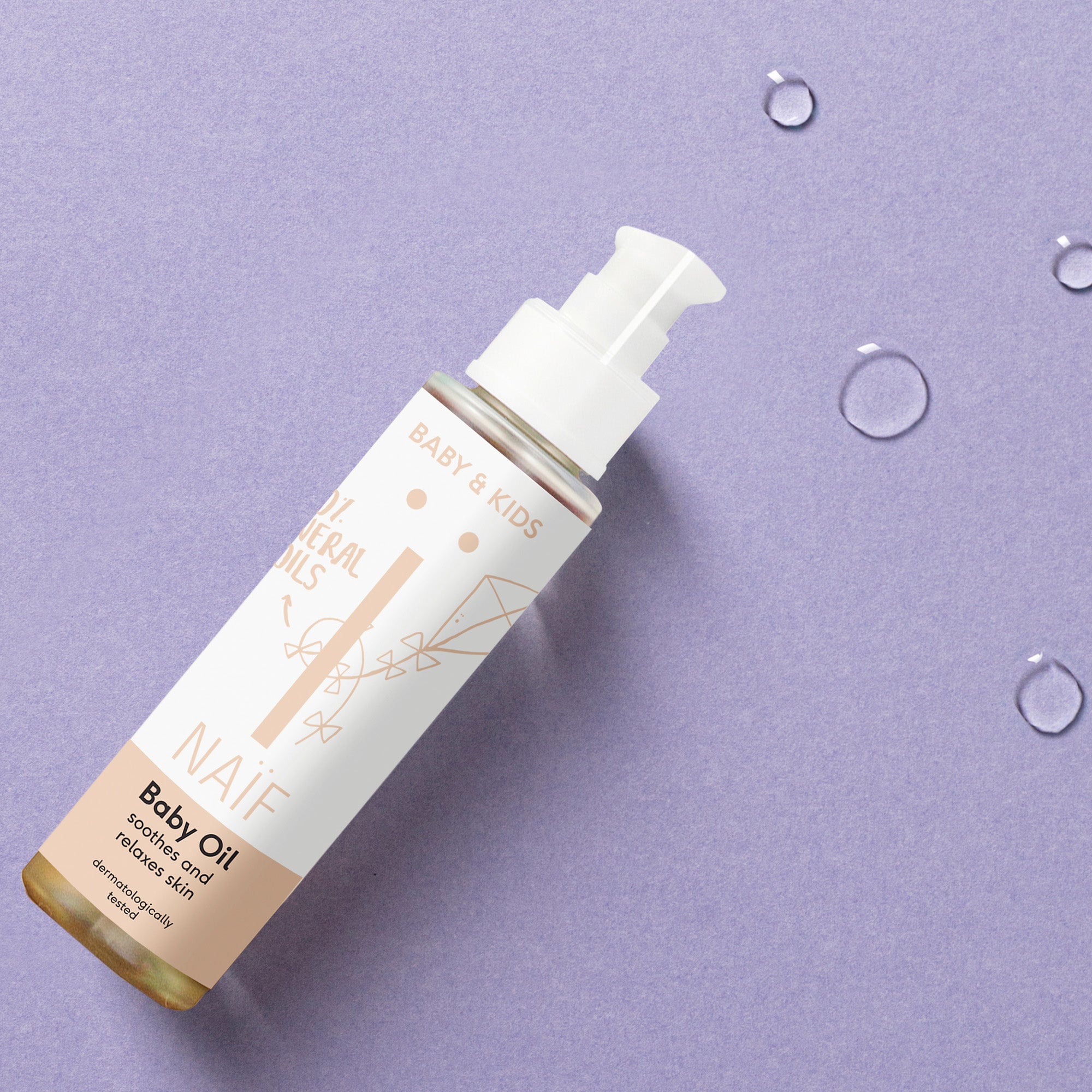
As parents, you want above all one thing: to give your own child only the best – especially in the first weeks after birth. The skin plays a major role in this. It is still delicate, permeable and prone to irritation. And that's exactly why it's so important to us at Naïf to develop products that protect and above all really care – without burdening. For years, our baby bath oil has been a popular classic. It cares for sensitive and dry baby skin during bathing without drying it out, and provides intensive refatting. But from many conversations with parents, professionals and midwives in Germany and Austria, we heard: there needs to be a second variant. One that is even more tailored to the special needs of sensitive or irritated baby skin. One that is even milder. One that completely avoids fragrances.That's why we developed together with experienced midwife Isabelle Schneider a bath oil without fragrance.Who is Isabelle Schneider?Isabelle has been working as a midwife for many years – in the delivery room, in postpartum care and on social media. Under the name @hebammenblog she shares well-founded midwifery knowledge with hundreds of thousands of parents on Instagram. Open, honest and approachable, she talks about what really matters to young families – from the first bath to baby care to self-care in the postpartum period.Through her work with many newborns, she knows the challenges of sensitive skin intimately. She sees what really helps – and what sometimes can just be too much."The first baby baths can really be magical. It's recommended to use an additive that works nicely refatting. Nursing moms can happily use breast milk here, which is perfectly suited. If you don't want that, don't nurse, or your baby is already older, you can happily use a baby bath oil for sensitive skin. Less is more: choose a product here that cares gently, but still provides adequate protection."This attitude accompanied us in the development of the new bath oil: caring, but pure. Protective, but irritant-free. And always with the knowledge that baby skin has its very own language.Why a bath oil without fragrance?Water alone dries out the skin – this is especially true for newborns, whose skin barrier must still fully develop. A bath oil supports the skin by creating a fine protective film that preserves moisture and protects the skin from irritation.Our new Naïf Bath Oil with 0% Fragrance deliberately omits fragrances – not because we think fragrances are generally problematic, but because we know that many parents, especially at the very beginning, want a completely neutral, gentle care. For particularly sensitive skin types, with neurodermatitis, or simply to not mask the natural baby scent.What makes our bath oil specialThe Naïf Bath Oil without Fragrance is based on few, carefully selected ingredients – including sunflower oil and coconut oil, which are known for their refatting, soothing properties. It is: Without fragrance, therefore ideal for newborns and sensitive skin Naturally refatting, to strengthen the skin barrier Free from mineral oil and microplastics, vegan and dermatologically tested Easy to apply: just a few drops in the bathwater is enough So mild, that you often don't need to cream your baby after bathing Midwife Isabelle recommends:"Add a few drops of the bath oil to the water, bathe your baby in it and then simply pat dry gently – that's often all it takes."For you – and your babyThe Naïf Bath Oil without Fragrance is for all parents who want to focus on the essentials when it comes to care. It's perfect for the first baths after birth, for sensitive skin, for parents who consciously avoid fragrances – or for anyone who simply wants to experience the natural baby moment pure.We are very pleased to have developed this product together with Isabelle. Because good baby care begins with a real understanding of skin – and of parents.Have you ever wondered what you need for (the first) baby bath and what preparations would make your work easier? Isabelle has created a list for you, you can download it here and be well prepared:
Learn more
Baby powder without talc? That's Naïf!
Woohoo! We've got something new. Our baby assortment has expanded with a brand new product: baby powder! Well.. not that exciting you might think. But it is! You might know baby powder as talc powder. And that's one ingredient we left out. Because call us Naïf, but soft baby bottoms don’t deserve harsh ingredients. Baby powder without talcBaby powder without talc it is, but why? Recent research about talc show there are some negative side effects to the mineral. It even resulted in some discussions about regulations of the ingredient. Time for an alternative! Baby powder without talc.The negative side of talcAlright, about these side effects. Because it's quite something. In July 2024 the International Agency for Research on Cancer, also known as IARC, has shared their findings about talc powder. IARC is part of the World Health Organization (WHO), so that's a pretty big deal. A group of 29 experts did research on the mineral, which showed that there is some evidence that talc may be carcinogenic for humans. They looked at scientific literature from research on cancer in humans, animal testing and they found evidence of talc having carcinogenic properties. (Source: IARC)In September The European Chemicals Agency’s (ECHA) commission for Risk Assessment (RAC) classified talc as a 1B carcinogen. Which means the mineral can possibly cause cancer in humans. (Source: ECHA)You might understand why we would rather avoid this ingredient. But how do we create soft baby bums without talc then?What's in it?Instead of talc our baby powder is made from pure rice starch. It's a plantbased ingredient that absorbs moisture an is proven to help with diaper rash! Perfect for caring for the sensitive and moist skin in the diaper area. But all other places and skin folds where moisture can collect, like armpits and neck, can also use a little baby powder at times!
Learn more
Setting up a changing table? We share our best tips!
Baby on the way? Then you'll need to set up a nursery, of course. It's fun to work on, but especially if it's your first child, you might not know where to start. The changing table in particular is quite a challenge. What do you really need and what's just going to be in the way? Read our tips below! Changing table To set up a changing table, you first need a changing table, of course. You can actually use any type of (drawer) cabinet or table that is high enough to work comfortably at and wide enough for a changing pad (approximately 70x50x10cm). It's handy to have a slightly larger work surface so that in addition to the changing pad you can also place all your frequently used items. That makes changing easier. Via Marketplaces or secondhand shops you can find great cabinets or changing tables for a nice price. Changing pad A changing or diaper pad is a real must on your changing table. You want to be able to offer your baby a comfortable spot, after all. Changing pads often have a raised edge on both sides, so your baby doesn't just roll off the table. Very handy. You can place the pad lengthwise or widthwise on your changing table. It just depends on how you prefer to change and how much space you have. They come in all sorts of types, sizes and prices! A simple pad does the job, but you can make it as fun (and stylish!) as you like. Pad cover Changing pads are often made of plastic. Very handy when poop, pee or spit regularly gets on them. But it's not very comfortable, and usually not very pretty either. That's why there are special changing pad covers. Not only practical because it goes straight in the wash when it gets dirty, but you can also alternate with fun prints to complete your nursery. Additionally, you can also place a cotton cloth over your changing pad cover so you don't have to wash the cover after every accident. Baby wipes Perhaps the most practical and important part of the changing table: baby wipes. When the diaper comes off and your baby is squirming on the table, there's no time to waste. With your free hand you want to quickly reach the wipes. Choose a variant suitable for sensitive baby skin, with 0% perfume and alcohol, and that also comes out of the package easily. There are also special boxes to store your wipes: they come out of the package more easily and stay moist longer. When placing them, consider your dominant hand, left or right-handed, you don't want to miss during changing. Changing table baskets To keep the changing table organized and have all frequently used products within reach, a couple of changing table baskets are really a must. You can use them to store your diapers and wipes, but also to have care products like zinc cream and a rich cream at hand quickly, or to store pacifiers, rattles, and cotton cloths. You can use the drawers below for rompers, clothes and extra items (diapers and wipes). A wall shelf or rack A shelf above your changing table is not essential, but very handy if your changing table isn't very large. And it's also nice to decorate! On the wall shelf you can place, for example, a book, poster or a stuffed animal. You can also fit extra care products on it, such as everything for those first baby baths.
Learn more
The top 5 worries every parent has about baby care (and the answers that actually help)
As a (new) parent, you have a lot on your mind. And call us Naïf, but we believe you should be able to use care products without worries. Of course, that's easier said than done, because you want the best for your baby. Where to start? We're happy to help! What care products do I need for my baby? Good question, because when you look in the stores there's just so much to choose from. No worries, because a baby really doesn't need much. At Naïf we're big fans of just the basics: bath oil, baby oil and zinc cream. Oh.. and don't forget the stacks of baby wipes, you really don't want to be without those. After a few weeks, you learn what your baby needs. For dry skin, you'll want to give some extra love with a body lotion, rich cream or baby balm. Does your little one have a full head of hair, then a baby shampoo might be handy. As your kids get older, you can make the care routine more and more fun. Replace the bath oil for example with bath foam for a bath full of bubbles and fun. Want to know more? We previously wrote a comprehensive blog about what you really need, and what you don't. What are good ingredients and which ones should you avoid? Good ingredients are ingredients that really contribute to the best care for your baby. Think for example of plant-based oils for hydration and glycerin to support dry and damaged skin. Also antioxidants such as vitamin E (the official name is tocopherol) and anti-inflammatory ingredients such as shea butter, panthenol, aloe vera and zinc oxide are a good addition to your baby care. On the other hand, you'll want to avoid ingredients that can be harmful to your baby or the planet. Think of microplastics, mineral oils and ingredients that may contain 1,4-dioxane such as PEG and SLES. In this blog we already wrote about everything you do and don't want in your baby care. What should you look for when buying baby wipes? As a parent, you go through stacks of baby wipes. To be precise, about 14,000 PER CHILD! Something that is used so often on your baby's skin must of course meet a number of requirements. First of all, they must of course do what you buy them for: cleaning baby bottoms (and nose, hands and table because multi-functional, that's what they are). What you want is a moist wipe, but not too moist. It's also important that they're nice and sturdy, because you don't want to get dirty hands. It just happens that 94% of the Ouders van Nu testers are satisfied with the sturdiness of Naïf's baby wipes! Also important: how does your baby's skin react to them? Does your baby get a rash from using baby wipes, then it's time to look for something new. To prevent irritation, you may want to check the ingredients beforehand. Is the ingredient list as long as your receipt after you've done a week's worth of shopping? Then leave them and look for baby wipes with less ingredients. The fewer ingredients, the lower the chance of irritation. There are a number of ingredients you'll want to avoid when it comes to baby wipes, because they're simply not necessary to clean your baby's bottom properly. Alcohol is a good example of something you don't want to use on the sensitive skin around the diaper area. You'll also want to avoid fragrance, because that's really not necessary to get things clean. If it's up to us, plastic doesn't belong in baby wipes either. Unfortunately, the vast majority of baby wipes are made from it. If you think it's important to save on plastic, then the choice for a baby wipe without plastic is quickly made. You can recognize them by the "no plastic inside" logo on the packaging. Should I apply sunscreen to my (newborn) baby? The short answer is yes! You should also apply sunscreen to your (newborn) baby. And yes, that starts with the early spring sun. The first step, even more important than sunscreen, is to keep children under 1 year out of the sun as much as possible. Seek out shade or create it yourself with a parasol or sun shade. Step two is protective clothing. Make sure your baby wears light, but protective clothing. There's even special UV-protective clothing, but that's not necessarily required. Want to know how protective the clothing is, then hold it in the sun for a moment. If you can see through it, it doesn't do much. If it blocks the sun, then you're good. And then comes sunscreen! Apply SPF 50 sunscreen generously to any skin not covered by clothing. You can choose a cream, stick or spray. Just make sure it's not a misting spray. Those evaporate in the air and very little ends up on the skin. Plus, your baby can also inhale this type of spray, which is of course not the intention. A liquid spray (like ours) that doesn't mist can be used! With babies, you might prefer to spray it on your hands first and not directly on the skin. How much exactly do you need to use? Just a nice thick layer. Don't forget to reapply every two hours and also cover the often forgotten spots, like the ears, nose and lips well. More sun protection tips? We spoke with dermatologist Elodie Mendels about how to prevent sunburn. Help my baby has a rash, what should I do? A rash on your baby is never fun, but it does happen often. That sensitive skin sometimes gets a real beating. To fix the rash, it's of course important to know exactly where it comes from. Diaper rash Diaper rash is a form of rash that is common in babies. No wonder either, that wet diaper is a breeding ground for bacteria. You recognize diaper rash by the red skin and sometimes, if it's really bad, there are also open wounds. How to prevent and cure it? You can preventively apply zinc cream. The zinc oxide in this cream protects the skin against moisture by forming a barrier. It also has anti-inflammatory and antibacterial properties and thus helps with the healing process. It's also important to keep the skin clean and dry. Taking the diaper off from time to time and letting your baby play on an absorbent mat ensures that the skin can dry properly. Dry skin or eczema Your baby can also suffer from dry skin, or even eczema. What do you do then? It's mainly important to keep the skin well moisturized. For this you can use a rich cream or baby balm. A lotion is often not enough for dry skin or eczema, because lotion consists largely of water, it is absorbed too quickly by the skin. You'd rather want a fat-based product, so that it doesn't sink in immediately, but instead creates a protective layer on the skin. Baby acne You might not expect it, but your baby can also get pimples. Baby acne is common after birth and has everything to do with your hormones. Yes really! Fortunately, it also goes away once those hormones are out of your little one's body. Are you breastfeeding? Then baby acne may last a bit longer, because your milk also contains hormones that can cause pimples in your baby. Cradle cap Then there's cradle cap. That thick greasy and yellowish rash that often appears on the head of a (newborn) baby. Where does it come from? The vernix layer that your baby gets at birth. When that dries out between the hairs, cradle cap forms. If it lasts longer than four weeks, it's no longer called cradle cap but seborrheic eczema. Both will go away on their own and is otherwise not dangerous. If you think it looks unsightly, you can smear the scalp with baby oil and try to comb or scrape off the cradle cap after half an hour. If this doesn't help, there are also special creams that can help with cradle cap Other rashes With other rashes, such as chickenpox, impetigo and measles, it's always wise to visit your doctor. They can help with the right treatment for your situation.
Learn more
This is how you choose the best skincare for your kids
A baby's skin needs love and the best possible care. With ingredients that are safe for sensitive baby skin, but also nourish and protect it effectively, so you don't have to worry. How do you choose the right skincare? And what do you all need when the baby comes? You can read about it here. Sometimes it feels like your baby needs a 12-step skincare routine, but the reality is: your baby is okay and doesn't need that much. We've made list of products that are a must during the early and later days and which ingredients you want and don't want in your baby's care! What products do you need? For a newborn baby, it is useful to have a few basics at home. Care products you will use most often in the first period are: zinc cream (for nappy rash), a nurturing baby cream or body lotion (for dry patches) and a bath oil or mild wash gel (for in the bath or shower). Then you can expand with a baby shampoo and, for example, a bath foam. Also essential: plastic-free baby wipes! Which ingredients are great and which to avoid? To protect the baby skin as well as possible, make sure to choose ingredients that truly are important for your baby, such as: avocado oil (nourishes the skin and is almost identical to human skin oils in terms of ingredients) camomile (bisalobol on the label), calms the skin and is used in diaper cream, for example. cottonseed, helps the skin to retain moisture zinc oxide, has a healing and cooling function with e.g. diaper rash nut oils like almond oil and macadamia oil. These often also have a healing and calming effect. Coconut - this is often used as an ingredient (coconut oil or coconut fat) as a natural foaming agent in combination with salt. It's much milder than, for example, harsh chemical foaming agents like SLES. Sunscreen with a mineral UV-filter based on zinc oxide. It reflects the sun rays instead of absorbing them in the skin. This means a lower chance at skin irritation.. Ingredients we prefer to avoid: Ingredients that can irritate or dry out the skin, such as aggressive foaming agents (SLES), hard alcohol (note the difference between hard or soft) or allergens in essential oils (often used as natural perfume). substances that can close off the skin, such as mineral oil (paraffin, petroleum jelly, etc.) substances that can disrupt the hormonal balance, such as PEG and synthetic preservatives (parabens, phenoxyethanol) substances that can be potentially harmful to nature, such as plastics, microplastics and ingredients in chemical UV filters (Oxybenzone, Octinoxate, Octocrylene). Fun fact: Naïf carries the Zero Plastic Inside certificate from the Plastic Soup Foundation. When Naïf founders Jochem and Sjoerd first became fathers, they discovered that babycare could be better. Therefore, always do your own research and make your own considerations. Do you want natural care, but are you not a fan of musty creams? Then you can opt for a synthetic perfume. This means your product is not 100% natural, but it is gentle on the skin. Want a foam bath but not dry skin? Meet in the middle with Naïf bath foam based on Coco Sodium Sulfate.
Learn more
The perfect baby massage in 5 simple steps
Giving a baby massage is not only fun as a bonding moment between parent and baby, there are also all kinds of benefits: it promotes your baby's digestion, stimulates muscle and joint mobility and it reduces stress. But how do you actually do such a baby massage? What do you need? A baby! Massage oil (such as this soothing baby oil) or a nice body lotion A nice pillow or sturdy cloth with a towel and washcloth The preparationFind a quiet place and make sure your baby is lying safely and warmly, for example on a changing mat with a towel over it. Also keep an extra washcloth handy to (partially) place over your baby. Wait until an hour after feeding. Babies often have a bowel movement right after feeding. Make sure your hands are clean, your nails are not too long and if you're wearing rings you can best take them off. You can also put on a calm playlist. Have the oil ready and warm it up if needed between your hands. All set!5 massage stepsStep 1: Start with the legs. Your baby is already used to the touch of their legs, from changing the diaper. This is therefore a good starting point. Apply light pressure with your fingertips. Massage from the groin to the feet.Step 2: Make cycling movements with the legs, with the knees towards the belly. Massage the bottom of the feet in circular motions with your flat thumb. Massage from the heel to the toes.Step 3: Do the same with your baby's arms and hands. Pay attention to the signals your baby gives. If your baby is a bit firmer, you can also massage a bit firmer.Step 4: Now place your hands on the chest and stroke towards the side of the body. Then move your flat hand from the right shoulder to the left hip and from the left shoulder to the right hip. End with a circular motion over the belly.Step 5: To massage the back, your baby should lie on their belly. You gently go from their neck to the bottom of the back and back again, and finish with soft circular movements at their buttocks. Does it feel nerve-wracking? Then skip the back.
Learn more
Does your baby have red spots or a rash? This is what it could be.
Skin rashes are common in babies and toddlers. Sometimes it's a sign of a childhood illness or allergy, but sometimes it's also harmless and there's nothing you can do about it. Does your little one suffer from red spots or a rash and are you curious what it could be? Read more below about what it could be and what you can do about it. Baby acne What is it? Between 0-8 months, many babies get small pimples on their face. It usually takes a few weeks or months before everything is gone. It's not contagious, doesn't itch and usually goes away on its own. How does it develop? It's not entirely clear how the pimples develop, but it's thought to be related to (male) hormones from the mother that stimulate the baby's sebaceous glands. Hormones are passed to the baby through the umbilical cord and can remain in your baby's system for a while. What to do? Leave the skin alone as much as possible. Keep the skin clean with lukewarm water and a mild fragrance-free body wash. Don't use greasy products or products with fragrance, as these can actually clog the pores. Diaper rash What is it? Diaper rash is common. You recognize it by the open, moist and red spots that develop in your baby's diaper area. How does it develop? Diaper rash occurs from wearing a diaper: the urine and feces in the diaper cause a change in the pH value of your baby's skin. Combined with the warm, humid environment of the diaper, this can lead to weak and irritated skin. What to do? Although this rash is annoying, fortunately there is a solution for it: zinc cream. A diaper cream with zinc oxide helps protect, cool and heal the skin. To prevent diaper rash, it's best to change the diaper immediately after urination or defecation, and keep the skin as clean and dry as possible at all times, a baby powder after changes can definitely help with prevention too. Also read here the tips for diaper rash from dermatologist Elodie Mendels. Heat rash What is it? Heat or heat rash is also called milaria in the medical world. It especially occurs during summer in babies and young children, on areas where the skin is directly exposed to the sun (think: face, neck) or where there is little air circulation and much friction such as the buttocks, groin or armpits. It itches and causes a prickling sensation. How does it develop? The rash develops because the heat and perspiration clog the sweat gland and the sweat cannot be discharged. Especially in young babies, these glands are sometimes not fully developed. What to do? The bumps will go away on their own once your baby is no longer so warm. In the meantime, you can apply a cold washcloth to the spots to provide cooling. To prevent it, you can dress your child lightly, provide plenty of fresh air and cooling on warm days and sit in the shade. Warm irritated spots can be treated with a zinc cream for cooling. Eczema What is it? About one in ten babies suffer from it: eczema. It's an inflammatory reaction of the skin and you recognize it by flaking, crusts, bumps, cracks or blisters and dry and itchy skin. It's a hereditary condition and is not contagious. In babies, it often appears on the cheeks, chin, elbows, knees, stomach and back. How does it develop? The skin's protective layer doesn't work as well, which means the skin easily loses moisture from within and is at the same time vulnerable to external influences. Additionally, the skin's immune response is too active, causing inflammation in the skin. What to do? Try not to let your child scratch the eczema as this makes it worse. Cut fingernails short and possibly put a mitten or sock over the hands. Water also dries out the skin, so don't wash your child too often or for too long and use a mild body wash or nourishing bath oil. Also don't forget to apply a rich cream to dry spots for extra hydration. And dress your child lightly and in light natural fabrics such as cotton and silk. Childhood illnesses with spots If your child is really sick and develops red spots, it's possible that he or she has caught a childhood illness. Who doesn't know them: chickenpox. Probably one of the most well-known childhood illnesses, almost every child has had them. This disease usually occurs in kids aged 1 to 8 years old and often develops in winter or early spring. You can recognize it by spots all over the body (also in the mouth and hair) that later become blisters, and a child that is fussy and has a fever. It usually goes away within 10 days and although there is no medicine for chickenpox, you can relieve the itching by applying zinc ointment to the blisters. Fifth disease is a contagious spotted disease that can occur in babies, older children and adults. It's caused by the Parvo B19 virus and spreads through moisture particles in the air. You recognize this illness by red spots on the face that then spread over the entire body. Your baby might for example suddenly get a fever or very red cheeks and itching. The spots often disappear within a week on their own, but if your child really feels unwell, you can consider giving paracetamol. If you are pregnant and someone in your surroundings has this illness, it's important that you contact your doctor or midwife. Children between 6 months and 2.5 years old can catch sixth disease. It's caused by herpesvirus type 6. Your child suddenly has a high fever and develops small light red spots on the face, neck and later also on the rest of the body. The illness goes away on its own and after 5-7 days your child often feels better. In the meantime, it's important that he or she drinks well. By dressing your child lightly, he or she can shed heat well. With scarlet fever, your child usually suffers from a sore throat, fever (sometimes up to 40 degrees) and red spots on the skin. It often starts on the chest and spreads to the rest of the body, especially under the armpits and in the groin. After 3 days your child can also develop a red tongue. The spots are rough and bumpy but don't itch. The illness is caused by the bacterium streptococcus. It usually goes away between 7-10 days, and in the meantime it's important to ensure that your child drinks well, rests and has something to suck on for sore throat (candy, ice cream). Children in the Netherlands are usually vaccinated against rubella. It's a contagious disease caused by the rubella virus and often starts with a cold and then progresses to swollen glands, fever and pink-red spots on the face and behind the ears. This goes away after a few days. You can best care for your child as if it has a cold, and make sure he or she drinks plenty of water. Rubella can be harmful to unborn babies, so call your doctor or midwife if you are pregnant and your child has never had rubella or been vaccinated against it. Most children in the Netherlands receive 2 injections against measles (MMR vaccine), so this disease is no longer common. It's caused by a virus that settles in the throat, mouth and nose and often starts with a cold, cough, red eyes, and fever. Then small white spots appear in the mouth and then red spots on the face and body. Due to reduced immunity during this illness, some children can catch something else and develop an ear infection, pneumonia or meningitis. If your child has measles, he or she cannot go to childcare or school, and it's important to inform everyone. Does your child have spots and blisters in and around the mouth and on the hands and feet? Then he or she probably has hand, foot and mouth disease. It can be caused by various viruses, such as coxsackievirus A16 or enterovirus type 71. It starts with a slight fever, and then your child can become runny-nosed but can also get stomach pain. After 1-2 days, small red spots appear in the mouth, which hurt and can become inflamed. It usually gets better within 2 weeks, and try to give your child small sips of water or let him or her suck on a water ice if drinking causes too much pain. Always be cautious with a baby with (high) fever and contact your doctor if your baby is under 3 months old or if your child is getting increasingly sick, is inconsolable or drinks little to nothing. Does your child become drowsy, does he or she cry or moan a lot or suffer from headaches or neck stiffness? This can indicate meningitis. Some babies also develop sepsis, where they get dark red or purple spots on their body that cannot be pressed away. Then rapid treatment in the hospital is needed.
Learn more
Which baby products to use and when?
Baby care comes in all shapes and sizes. As a new parent, you often don't know what you really need. Do you use bath foam or shampoo for a newborn baby? And when and how often should you apply body lotion? A baby develops quickly and care needs change with each phase. Below we explain which products you need and when. The first 24 hours Your baby is born with a natural protective layer: the vernix caseosa. This layer develops during the twentieth week of pregnancy, is full of proteins and nutrients and keeps baby's skin nourished and protected against infections. You want to leave this layer be for as long as possible, but at least the first 24 hours. So in the beginning you don't need anything at all. Still, it's wise to bring some mild care products in your hospital bag in case you need to stay longer than planned. Our mini set contains all Naïf bestsellers in small sizes. Add a pack of baby wipes and a nice shower foam and face wash for yourself and you're all set! Between 0-4 weeks In the first weeks your baby will need very few care products. Babies don't sweat and usually don't get very dirty either. They also often have little or no hair, so shampoo is usually not needed. Bathing your baby 2 to 3 times a week is more than enough in this phase. But which products do you use then? Water can dry out the skin, which you want to avoid with sensitive baby skin. You can add a few drops of mild bath oil to the baby bath. The oil makes the hard water softer and nourishes the skin directly during bathing. Prefer to shower with your baby? Use a mild wash gel. For extra sensitive skin, opt for a fragrance-free version. A large drop of wash gel on a washcloth is usually enough to clean your baby well. After bathing or showering, you can apply a mild oil to your baby. If you have a bit more time and want to make a nice moment out of it with your little one, you can also use this to give your baby a massage. To keep your baby's bottom, but also hands and face clean throughout the day, you'll need plenty of wipes. Our plastic-free wipes are made from wood fibers and contain 0% alcohol and fragrance. And they come in two varieties: water-based or with a mild lotion for extra hydration. Not sure which you need? Read here more about the difference between the two types of wipes. Not dangerous, but very painful: diaper rash. That's why it's recommended to change your baby's diaper regularly and to preventively apply a zinc cream to your baby's bottom. Read here more about the tips and tricks from dermatologist Elodie Mendels. From 0 to 1 year You're getting to know your baby and their needs better and better. That's why it becomes easier to determine which products your little one needs after the first few weeks. You can add a number of products where needed: Hair care and styling: some kids are born with a full head of hair, for others it takes a while before the first hairs appear. With little hair, a bit of bath oil over the head during bathing may be enough for the first period. But as the locks get thicker, you can switch to a mild shampoo. If the hair is really longer and hard to comb through, you can also use a hair lotion. Body lotions, creams, and balms: you can start applying from birth, but after a few weeks you'll probably better know what your baby's skin really needs. A body lotion can always be used, and a rich cream is suitable for when the skin is a bit drier. The difference? A lotion contains more water, a cream more oil. Does your baby now suffer from really dry patches and rough skin or cracks? Then you can also choose for an extra nourishing baby balm. Bath and shower fun: the first few months your baby doesn't really need bubbles in the bath, but after 3-6 months you might want to add a bit more fun to bath or shower time. And what's better than a nice full bath foam? Sun protection: in the first year you should keep babies out of the sun as much as possible. But since that's not always possible, it's wise to apply sunscreen preventively on sunny days. Choose a high protection and a formula suitable for sensitive baby skin, such as our mineral sunscreen with SPF 50. Don't feel like collecting everything but want to have all the essentials at home? With our baby starter bundle you're well set for the first period. Parents' favorites 1. Shampoo: "A wonderful shampoo for all our kids! No mess, smells great, and even with lots of hair you don't need much and it lathers beautifully!" 2. Wash gel: "Very positive, my daughter is allergic to many products. So nice that this wash gel is gentle on the skin and smells great!" 3. Bath foam: "My little one always got a rash but this is so nice for his skin. Soft skin after a bath and it smells great too" 4. Baby cream: "Since I've been applying this generously every day, my kids hardly have any dry patches! Very happy with it. And I want to smell them all day, so nice." 5. Body lotion: "We've been using this for our daughter for a year now. She has very dry skin. These products really help and smell delicious!"
Learn more
Fun baby gifts to give and receive
The baby is here - finally! With a nice gift you help the new parents on their way or spoil the little one. Whether you're looking for something practical for the first months or something that brings joy later on, it can be quite a search for a nice gift. From soft baby textiles and carefully produced care sets to fun options that are guaranteed to be a hit – here are 10 special gifts that new parents would love to receive. Everything you can put to good use 1. Leo Leo Changing Mat – Leo Leo Copenhagen A changing mat always comes in handy. This Leo Leo Changing Mat is made from 100% organic GOTS-certified cotton. And if the parents already have a changing mat at home, your gift will be the lifesaver when 'shit hits the fan' - a spare mat is no unnecessary luxury, every parent knows that. Compact and practical, ideal for on the go in the diaper bag. 2. Naïf x Repose AMS Tiny Human Essentials Kit As a parent, you want to care for that delicate baby skin, nothing worse than red spots or irritated skin. With this limited edition care set, you're all set! It contains a Naïf x Repose AMS striped wash bag, Naïf Milky Bath Oil and Naïf Baby Cream fragrance-free. The ideal gift to care for baby skin and give parents some relief during their new adventure. 3. Gray Label Baby Knitted Mittens These knitted mittens from Gray Label are made from 100% merino wool and keep your baby's hands nice and warm. They are available in different colors and you can easily thread them through your little one's jacket so you never lose them. The very smallest can already use them, as they are available in Extra Small and Small sizes (0-1 year). Perfect for cold days! 4. Londji Pocket Puzzle Mama This puzzle from Londji is ideal for little puzzle solvers in the making. The 7 puzzles, each consisting of three pieces, depict mother animals with their babies. The puzzle promotes creativity and fine motor skills in little ones. Our favorite? The bear with her cubs and the mouse with her mini. 5. Garbo & Friends Hydrophilic Spit Cloths Bluebell These spit cloths made from soft cotton are perfect for cleaning up milk residue or burps – trust us, you can never have too many ;). Available in stylish earth tones and botanical prints, it's not only a practical gift but also a must-have for every baby essentials list. 6. Book Invisible Things This beautifully illustrated book lets children and adults discover the magic of the everyday. Because some invisible things are just worth discovering. The book invites first conversations about emotions and moods, which are often left unspoken. Highly recommended! 7. Naïf Tiny Bubbles Essentials Set Have fun bubbling with this must-have set from Naïf! Of course, you only want the very best for the new baby, and this set delivers. Safe products made with natural ingredients and suitable for sensitive skin. With this set, new parents can try the shampoo, wash gel and body lotion. 8. Repose AMS Baby Hat in Crème Brûlée Stripe An adorable baby hat from Repose AMS, made from soft materials that keep the baby's head warm. For winter babies an absolute must-have, but young babies can wear it in summer too. This stylish hat is a perfect gift for every stylish baby (to-be). 9. Quut Jellyfish Toy This innovative bath toy from Quut is made from soft foam and stimulates both motor skills and creativity in your little one. The jellyfish fit into each other and your mini can puzzle away. Perfect for bath time! 10. Gray Label Rib Socks (2-pack) Soft and stylish rib socks for your little one. Available in fresh colors and made from organic cotton. These socks keep little feet warm and match any outfit. Ideal for the winter months! Everything with a personal touch If you want to give an original birth gift then you can think of a birth gift with a name, in other words a personalized birth gift. These are the best birth gifts with names. 1. Personalized book from MrStarsky You know them; the personalized books. Absolutely a great gift for life. But what if you could give a book as a gift based on an entered name, birthplace, date and time? That's right, then you have a very unique birth book. And this is exactly the kind that MrStarsky makes. Yes, exactly the people behind the same personalized posters. We can never get enough of them. 2. Backpack Studio Noos Who doesn't know them; the personalized backpacks from Studio Noos. Choose the backpack plus the name and - tada! - birth gift on fleek. 3. Bandana from Flora Bandana Do you know Flora Bandana yet? Fleur personalizes bandanas with names and words. You can choose from different colored cloths and threads. How cute when the baby crawls around with such a brightly colored bandana around the neck. 4. Apron with name from Jet x Atelier POMME The baby can't use it right away, but waste not, want not. The mini will definitely play kitchen or bake something at some point and then this amazing apron is pretty awesome. Anyway, everything that's personalised from Atelier POMME is fantastic! 5. Loveliest photo book with name Sure, you can put a photo book together online, but you can also buy an old-fashioned photo book. No, not one of those boring white or blue ones, but one with the most beautiful vintage fabrics from Atelier Poppy. And you know what's nice, you complete it with a label including the baby's name. Forever wishlist material! 6. Name puzzle from CRE8 You can never go wrong with puzzles. But what if it's a name puzzle. That's right! The name puzzles from CRE8 are delightful to look at and fun to put back together. Difficult too, so it's good for your brain as well. You can choose from different sizes and colors and you can even have a personal message engraved on it. Fun fact: during Christmas they do Christmas ornaments with names. 7. Sheet, bath cape or towel from Atelier Annur With the beautiful, soft Atelier Annur (we can't stop looking, no way) you can have sheets, bath capes or towels embroidered with a name in flowing letters. Think colors like Ivory, Burgundy Red and Sage Green. Well, we know which one we want. 8. Wooden lamp with name Oh, how cute. The wooden bedside lamps from Hethoutlokael have something magical. A lamp you can stare at for hours. Besides that, we think it's pure craftsmanship. You can choose from different "backgrounds" and enter the name yourself. 9. Name hanger Punched out names in all kinds of colors that you can, for example, hang at the top of the crib or on the wall? Yes indeed, JibbeJebba has it. Don't like the punching thing? Then there are also wire words. Check it out yourself. 10. Vintage knitwear How cool is this! Willie the Label is a company from Munich where you can send a photo of a drawing by your child, which they then print on a t-shirt or sweater. Now babies aren't very creative with pen and paper, so this won't work for a birth gift. Of course, there's a solution; vintage knitwear where you can have a name embroidered. You can also provide your own knitwear.
Learn more