

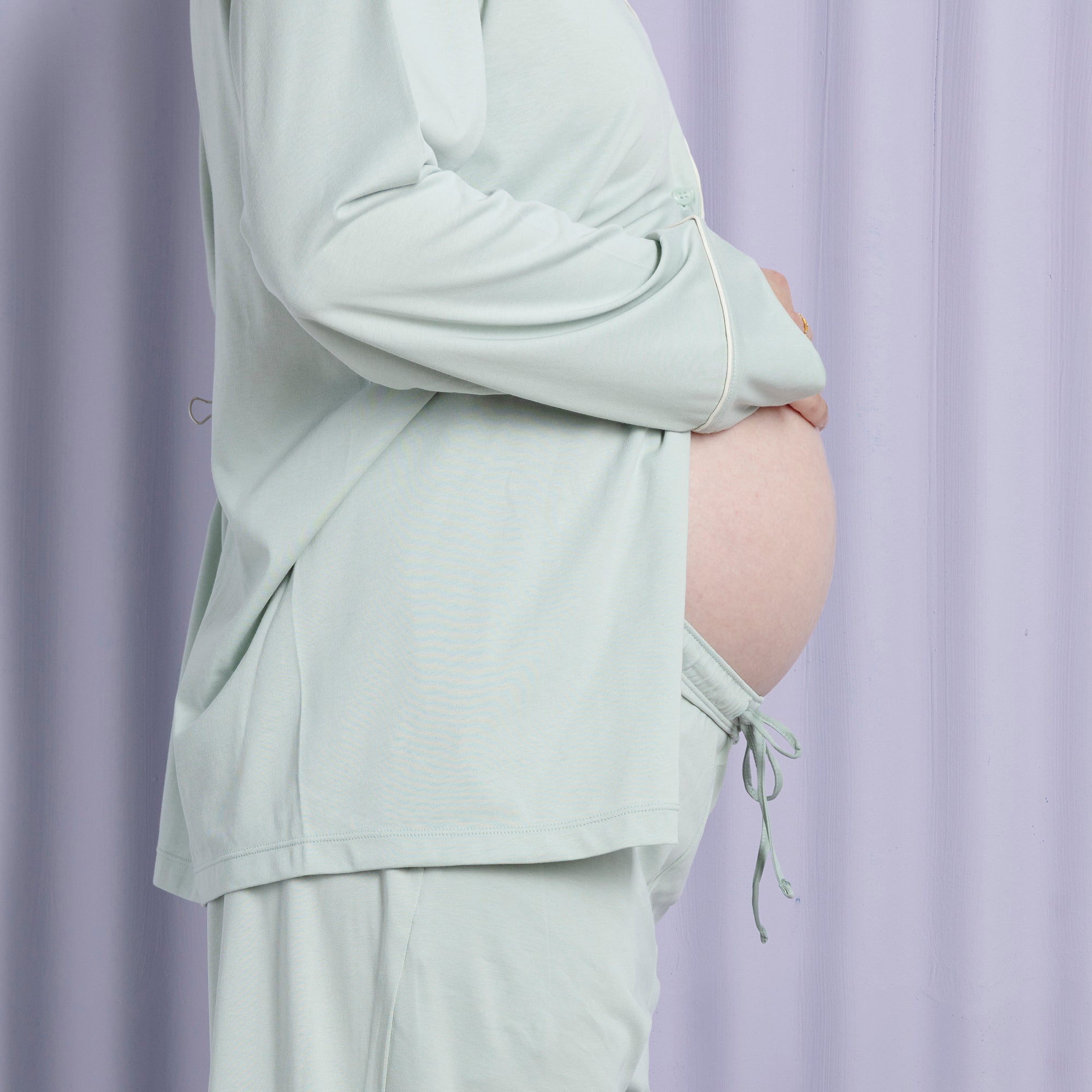
Maybe you know the saying: nine months in, nine months out. Your body takes nine months to make a little person and then about nine months (but even up to two years!) to recover from it. Immediately after delivery you can expect a number of physical and mental changes, but in the months that follow your body will also need time to get back in balance. We also call this "postpartum". What can you expect?
Immediately after delivery
-
Sore vagina (or belly wound after caesarean section). If you have given birth vaginally - regardless of whether you have been cut or torn - you can be sore down below. A sore vagina can last a week and if you have stitches, it can last longer. Sitting or (long) walking can be uncomfortable, so take your time and try to make it as pleasant as possible for yourself. Sometimes lying down can help, but also try to walk and sit in small sections around the house. If you still feel scar tissue pulling after a few months, contact your GP or midwife. If you have had a caesarean section, recovery can take a bit longer. The wound can be sensitive and painful for the first few weeks, and you're not allowed to lift for 6 weeks after the surgery. After your c-section you might need some extra help and care for yourself and the baby.
-
Afterpains. Immediately after delivering the baby you will still have contractions to deliver the placenta. Even after the placenta is born, you might still experience some afterpains. These cramps cause your uterus to contract, the hole where the placenta was sits properly closed and returns to its normal size. Blood is also released to cleanse your uterus. If you are breastfeeding, you will often experience cramps during the let-down reflex, because the hormone oxytocin is then released.
-
Sweating. During and after delivery you can sweat quite a bit. This is partly due to the extra fluid you retained during your pregnancy and your hormone balance. It may also be that your sweat smells different than normal. No worries, the smell will be as it was before once your hormones settle back. In the meantime, it can be nice to wash daily with products with mild ingredients and drink plenty of water.
-
Baby blues. Quite a lot happens to you after delivery. This combined with released hormones can make you emotional. Somewhere between day 3-5 you may suddenly feel very down. Let those tears flow and talk about it with your partner or postnatal care helper. Usually it goes away within a day or a few days. If it lasts longer, contact your midwife or GP.
-
Engorgement. If you are breastfeeding, you may also experience swollen breasts a few days after delivery. The milk has started flowing well and the blood flow to the breasts is good, but your baby still needs to learn to drink properly. Make sure your breasts are properly emptied and that you don't pump too much, as this can lead to overproduction again. Cold compresses can help with discomfort. If you develop a fever and your breasts become red and hard, mention this to your postnatal care or midwife as this may indicate a breast infection (mastitis).
Physical discomfort
Also later after delivery, when you feel much stronger and better, there can be a number of physical discomforts.
-
Urinary incontinence. During your pregnancy your pelvic floor muscles became softer and looser. Additionally, there is a lot of pressure on your pelvic floor during delivery. The result? Your bladder sphincter muscles don't work as well, since the pelvic floor supports these muscles. As a result, sneezing can now cause urinary leakage. If you have problems with this, you can contact a pelvic floor specialist. This doesn't have to be the case and can recover well.
-
Unstable pelvis. Urinary incontinence is one thing, but you can also experience a wobbly feeling in your belly and pelvis for a number of months (sometimes longer). That's why it's important to start training gently again - as soon as it's possible. This is at the earliest after 6 weeks, once you've had a check with the midwife. See what works for you and what benefits your body. Nowadays there are nice programs that specifically focus on postpartum recovery such as the program from SterkHer.
-
Soft belly. Your skin was stretched quite a bit during pregnancy, as were your muscles. So it will take a while before it's back in shape. If you have a diastasis (gap between your abdominal muscles in the middle), a pelvic floor physio can help bring them back together. Certain yoga or pilates exercises can also help strengthen your core again. But also remember that your belly may not look exactly the same as before pregnancy - your body has, after all, brought a baby into the world! So be kind to yourself and your belly and treat yourself with a balm or oil.
-
Hair loss. About four months after delivery, hair loss can occur. During pregnancy your hair remained in the growth phase, but now the drop in the hormone estrogen causes it to fall out. Read all about it here.
Mental changes
There is suddenly a new family member, hormones are racing through your body and your sleep pattern is turned upside down. No wonder then that in addition to physical changes you also notice that you are in a different mental state.
-
Fatigue. Recovery takes energy, as does sleep deprivation. So fatigue is not surprising. Especially the first weeks and months are heavy, because the baby probably still needs multiple feedings at night. This will eventually pass, allowing you to slowly get longer nights again. Try to go to bed on time, split the "shifts" with your partner where possible, and enlist friends and family to help you nap in the afternoon if you can.
-
Forgetfulness. Due to hormones but also because there is a lot on your mind due to all the changes, you may be more forgetful than normal. Meanwhile, it has also been scientifically proven that the structure of your brain changes through pregnancy and childbirth (Matrescence: on pregnancy, childbirth and motherhood, Lucy Jones, 2023). So mom brain is a fact and nothing to be ashamed of.
-
Sadness. Quite a lot changes in your life, and sometimes you may miss things from before or the time you spent with your partner, other children or friends. This is very normal and slowly there will be more space for it again. If the feeling persists, don't be afraid to ask for help from your midwife or GP. Postpartum depression occurs in 10% of women after delivery, so it's important to get help if this is the case.
Postpartum after miscarriage
If you have had a miscarriage, it is not only mentally heavy, you also notice it physically. Like a full-term pregnancy, in most cases you still have to deliver and it takes a while before the hormones leave your body. How long this takes varies from person to person, but give your body time to heal.

