

Blog

Make sunscreen a habit? Best decision ever.
Sunscreen on, hat on, UV clothing on – and every day as soon as it gets brighter outside? Sounds like just another item on your already full to-do list, right? But what if you could not only save the day, but give your child something that protects them for life? Children learn through repetition – including sun protectionYou know it yourself: nothing works better with small children than repetition. Whether it's a bedtime routine or brushing teeth – routines provide security. It's the same with sun protection. If your child experiences from the start that applying cream, wearing a UV shirt and putting on a sun hat are just part of the routine, it will eventually become second nature.And later, it will remind you when you're in a hurry. Promise.Why sun protection is more than a summer topicThe skin of babies and small children is particularly sensitive. It can't protect itself yet, but it stores every sunburn – and that has long-term effects. That's why it's worth building a healthy attitude toward skin protection early on.Or in other words: What is routine today becomes a healthy habit tomorrow.How to build simple routinesDon't worry, you don't have to turn your daily life upside down. A few simple tricks are enough: Apply sunscreen after brushing teeth – as naturally as part of your morning routine. At the lake or on vacation: UV protective clothing instead of stress – saves you the daily argument about "forgot to apply sunscreen" and protects reliably. The sun hat is always ready – in the backpack, in the stroller, by the door. Lead by example! – When your child sees you applying sunscreen, they usually want to too. And that's great. From participation to understandingSooner or later, your child will ask: Why do we actually do this? That's your chance. Explain in kid-friendly terms that the sun is nice but strong. That our skin needs protection to stay healthy. And that applying sunscreen isn't a must – it's an act of self-care.You're helping your child take not just their skin, but themselves seriously.So: what sometimes feels like extra effort today pays off twice over: for healthy skin and strong routines. You're laying the foundation for your child to later take care of themselves confidently and independently – with ease and understanding.Naïf supports you with gentle mineral-based (sun protection) products that make applying sunscreen pleasant – for your child and for you.Good protection. Good feeling. Every day.
Learn more
This is how you choose the best skincare for your kids
A baby's skin needs love and the best possible care. With ingredients that are safe for sensitive baby skin, but also nourish and protect it effectively, so you don't have to worry. How do you choose the right skincare? And what do you all need when the baby comes? You can read about it here. Sometimes it feels like your baby needs a 12-step skincare routine, but the reality is: your baby is okay and doesn't need that much. We've made list of products that are a must during the early and later days and which ingredients you want and don't want in your baby's care! What products do you need? For a newborn baby, it is useful to have a few basics at home. Care products you will use most often in the first period are: zinc cream (for nappy rash), a nurturing baby cream or body lotion (for dry patches) and a bath oil or mild wash gel (for in the bath or shower). Then you can expand with a baby shampoo and, for example, a bath foam. Also essential: plastic-free baby wipes! Which ingredients are great and which to avoid? To protect the baby skin as well as possible, make sure to choose ingredients that truly are important for your baby, such as: avocado oil (nourishes the skin and is almost identical to human skin oils in terms of ingredients) camomile (bisalobol on the label), calms the skin and is used in diaper cream, for example. cottonseed, helps the skin to retain moisture zinc oxide, has a healing and cooling function with e.g. diaper rash nut oils like almond oil and macadamia oil. These often also have a healing and calming effect. Coconut - this is often used as an ingredient (coconut oil or coconut fat) as a natural foaming agent in combination with salt. It's much milder than, for example, harsh chemical foaming agents like SLES. Sunscreen with a mineral UV-filter based on zinc oxide. It reflects the sun rays instead of absorbing them in the skin. This means a lower chance at skin irritation.. Ingredients we prefer to avoid: Ingredients that can irritate or dry out the skin, such as aggressive foaming agents (SLES), hard alcohol (note the difference between hard or soft) or allergens in essential oils (often used as natural perfume). substances that can close off the skin, such as mineral oil (paraffin, petroleum jelly, etc.) substances that can disrupt the hormonal balance, such as PEG and synthetic preservatives (parabens, phenoxyethanol) substances that can be potentially harmful to nature, such as plastics, microplastics and ingredients in chemical UV filters (Oxybenzone, Octinoxate, Octocrylene). Fun fact: Naïf carries the Zero Plastic Inside certificate from the Plastic Soup Foundation. When Naïf founders Jochem and Sjoerd first became fathers, they discovered that babycare could be better. Therefore, always do your own research and make your own considerations. Do you want natural care, but are you not a fan of musty creams? Then you can opt for a synthetic perfume. This means your product is not 100% natural, but it is gentle on the skin. Want a foam bath but not dry skin? Meet in the middle with Naïf bath foam based on Coco Sodium Sulfate.
Learn more
Postpartum: this is what happens in your body
Maybe you know the saying: nine months in, nine months out. Your body takes nine months to make a little person and then about nine months (but even up to two years!) to recover from it. Immediately after delivery you can expect a number of physical and mental changes, but in the months that follow your body will also need time to get back in balance. We also call this "postpartum". What can you expect? Immediately after delivery Sore vagina (or belly wound after caesarean section). If you have given birth vaginally - regardless of whether you have been cut or torn - you can be sore down below. A sore vagina can last a week and if you have stitches, it can last longer. Sitting or (long) walking can be uncomfortable, so take your time and try to make it as pleasant as possible for yourself. Sometimes lying down can help, but also try to walk and sit in small sections around the house. If you still feel scar tissue pulling after a few months, contact your GP or midwife. If you have had a caesarean section, recovery can take a bit longer. The wound can be sensitive and painful for the first few weeks, and you're not allowed to lift for 6 weeks after the surgery. After your c-section you might need some extra help and care for yourself and the baby. Afterpains. Immediately after delivering the baby you will still have contractions to deliver the placenta. Even after the placenta is born, you might still experience some afterpains. These cramps cause your uterus to contract, the hole where the placenta was sits properly closed and returns to its normal size. Blood is also released to cleanse your uterus. If you are breastfeeding, you will often experience cramps during the let-down reflex, because the hormone oxytocin is then released. Sweating. During and after delivery you can sweat quite a bit. This is partly due to the extra fluid you retained during your pregnancy and your hormone balance. It may also be that your sweat smells different than normal. No worries, the smell will be as it was before once your hormones settle back. In the meantime, it can be nice to wash daily with products with mild ingredients and drink plenty of water. Baby blues. Quite a lot happens to you after delivery. This combined with released hormones can make you emotional. Somewhere between day 3-5 you may suddenly feel very down. Let those tears flow and talk about it with your partner or postnatal care helper. Usually it goes away within a day or a few days. If it lasts longer, contact your midwife or GP. Engorgement. If you are breastfeeding, you may also experience swollen breasts a few days after delivery. The milk has started flowing well and the blood flow to the breasts is good, but your baby still needs to learn to drink properly. Make sure your breasts are properly emptied and that you don't pump too much, as this can lead to overproduction again. Cold compresses can help with discomfort. If you develop a fever and your breasts become red and hard, mention this to your postnatal care or midwife as this may indicate a breast infection (mastitis). Physical discomfort Also later after delivery, when you feel much stronger and better, there can be a number of physical discomforts. Urinary incontinence. During your pregnancy your pelvic floor muscles became softer and looser. Additionally, there is a lot of pressure on your pelvic floor during delivery. The result? Your bladder sphincter muscles don't work as well, since the pelvic floor supports these muscles. As a result, sneezing can now cause urinary leakage. If you have problems with this, you can contact a pelvic floor specialist. This doesn't have to be the case and can recover well. Unstable pelvis. Urinary incontinence is one thing, but you can also experience a wobbly feeling in your belly and pelvis for a number of months (sometimes longer). That's why it's important to start training gently again - as soon as it's possible. This is at the earliest after 6 weeks, once you've had a check with the midwife. See what works for you and what benefits your body. Nowadays there are nice programs that specifically focus on postpartum recovery such as the program from SterkHer. Soft belly. Your skin was stretched quite a bit during pregnancy, as were your muscles. So it will take a while before it's back in shape. If you have a diastasis (gap between your abdominal muscles in the middle), a pelvic floor physio can help bring them back together. Certain yoga or pilates exercises can also help strengthen your core again. But also remember that your belly may not look exactly the same as before pregnancy - your body has, after all, brought a baby into the world! So be kind to yourself and your belly and treat yourself with a balm or oil. Hair loss. About four months after delivery, hair loss can occur. During pregnancy your hair remained in the growth phase, but now the drop in the hormone estrogen causes it to fall out. Read all about it here. Mental changes There is suddenly a new family member, hormones are racing through your body and your sleep pattern is turned upside down. No wonder then that in addition to physical changes you also notice that you are in a different mental state. Fatigue. Recovery takes energy, as does sleep deprivation. So fatigue is not surprising. Especially the first weeks and months are heavy, because the baby probably still needs multiple feedings at night. This will eventually pass, allowing you to slowly get longer nights again. Try to go to bed on time, split the "shifts" with your partner where possible, and enlist friends and family to help you nap in the afternoon if you can. Forgetfulness. Due to hormones but also because there is a lot on your mind due to all the changes, you may be more forgetful than normal. Meanwhile, it has also been scientifically proven that the structure of your brain changes through pregnancy and childbirth (Matrescence: on pregnancy, childbirth and motherhood, Lucy Jones, 2023). So mom brain is a fact and nothing to be ashamed of. Sadness. Quite a lot changes in your life, and sometimes you may miss things from before or the time you spent with your partner, other children or friends. This is very normal and slowly there will be more space for it again. If the feeling persists, don't be afraid to ask for help from your midwife or GP. Postpartum depression occurs in 10% of women after delivery, so it's important to get help if this is the case. Postpartum after miscarriage If you have had a miscarriage, it is not only mentally heavy, you also notice it physically. Like a full-term pregnancy, in most cases you still have to deliver and it takes a while before the hormones leave your body. How long this takes varies from person to person, but give your body time to heal.
Learn more
The perfect baby massage in 5 simple steps
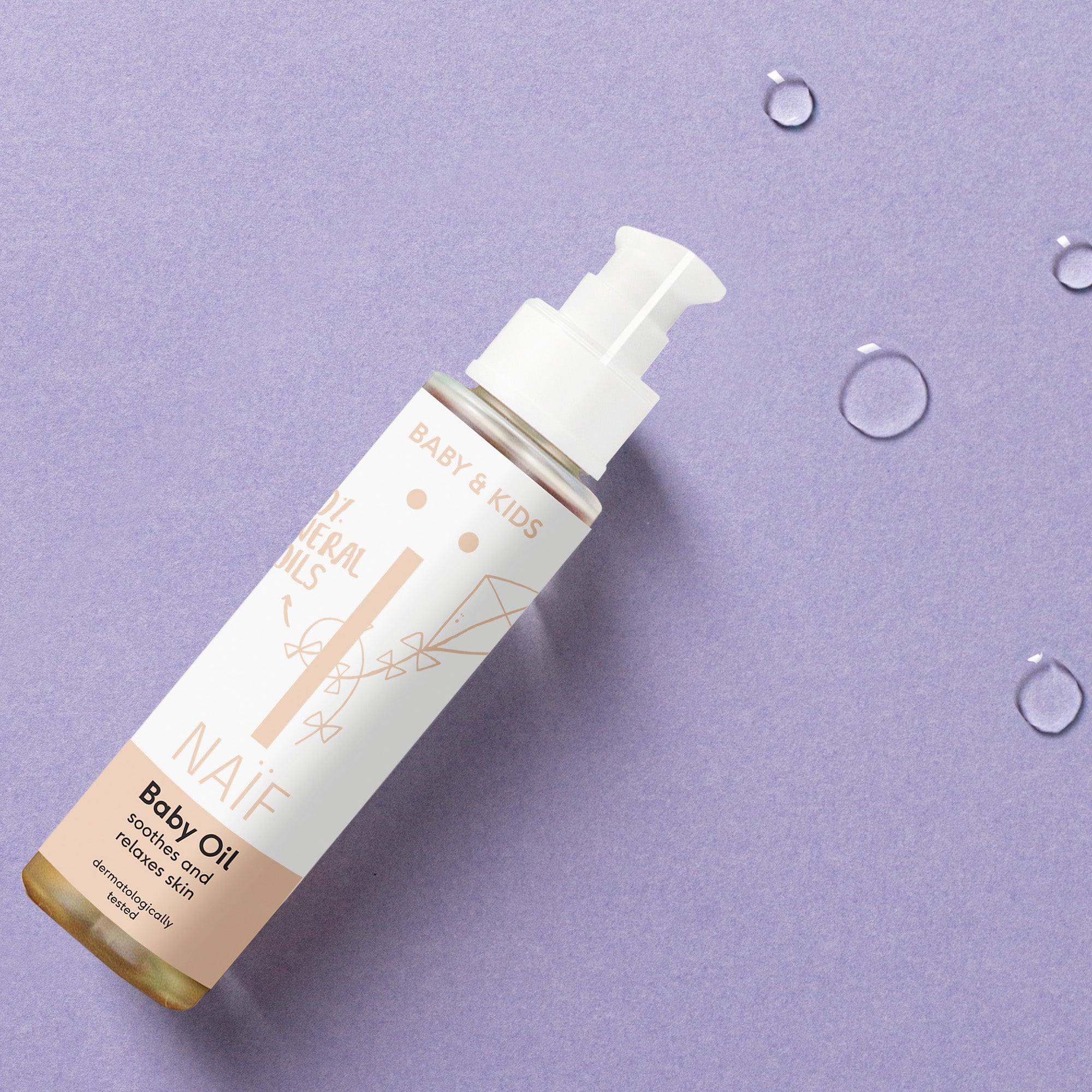
Giving a baby massage is not only fun as a bonding moment between parent and baby, there are also all kinds of benefits: it promotes your baby's digestion, stimulates muscle and joint mobility and it reduces stress. But how do you actually do such a baby massage? What do you need? A baby! Massage oil (such as this soothing baby oil) or a nice body lotion A nice pillow or sturdy cloth with a towel and washcloth The preparationFind a quiet place and make sure your baby is lying safely and warmly, for example on a changing mat with a towel over it. Also keep an extra washcloth handy to (partially) place over your baby. Wait until an hour after feeding. Babies often have a bowel movement right after feeding. Make sure your hands are clean, your nails are not too long and if you're wearing rings you can best take them off. You can also put on a calm playlist. Have the oil ready and warm it up if needed between your hands. All set!5 massage stepsStep 1: Start with the legs. Your baby is already used to the touch of their legs, from changing the diaper. This is therefore a good starting point. Apply light pressure with your fingertips. Massage from the groin to the feet.Step 2: Make cycling movements with the legs, with the knees towards the belly. Massage the bottom of the feet in circular motions with your flat thumb. Massage from the heel to the toes.Step 3: Do the same with your baby's arms and hands. Pay attention to the signals your baby gives. If your baby is a bit firmer, you can also massage a bit firmer.Step 4: Now place your hands on the chest and stroke towards the side of the body. Then move your flat hand from the right shoulder to the left hip and from the left shoulder to the right hip. End with a circular motion over the belly.Step 5: To massage the back, your baby should lie on their belly. You gently go from their neck to the bottom of the back and back again, and finish with soft circular movements at their buttocks. Does it feel nerve-wracking? Then skip the back.
Learn more
Does your baby have red spots or a rash? This is what it could be.
Skin rashes are common in babies and toddlers. Sometimes it's a sign of a childhood illness or allergy, but sometimes it's also harmless and there's nothing you can do about it. Does your little one suffer from red spots or a rash and are you curious what it could be? Read more below about what it could be and what you can do about it. Baby acne What is it? Between 0-8 months, many babies get small pimples on their face. It usually takes a few weeks or months before everything is gone. It's not contagious, doesn't itch and usually goes away on its own. How does it develop? It's not entirely clear how the pimples develop, but it's thought to be related to (male) hormones from the mother that stimulate the baby's sebaceous glands. Hormones are passed to the baby through the umbilical cord and can remain in your baby's system for a while. What to do? Leave the skin alone as much as possible. Keep the skin clean with lukewarm water and a mild fragrance-free body wash. Don't use greasy products or products with fragrance, as these can actually clog the pores. Diaper rash What is it? Diaper rash is common. You recognize it by the open, moist and red spots that develop in your baby's diaper area. How does it develop? Diaper rash occurs from wearing a diaper: the urine and feces in the diaper cause a change in the pH value of your baby's skin. Combined with the warm, humid environment of the diaper, this can lead to weak and irritated skin. What to do? Although this rash is annoying, fortunately there is a solution for it: zinc cream. A diaper cream with zinc oxide helps protect, cool and heal the skin. To prevent diaper rash, it's best to change the diaper immediately after urination or defecation, and keep the skin as clean and dry as possible at all times, a baby powder after changes can definitely help with prevention too. Also read here the tips for diaper rash from dermatologist Elodie Mendels. Heat rash What is it? Heat or heat rash is also called milaria in the medical world. It especially occurs during summer in babies and young children, on areas where the skin is directly exposed to the sun (think: face, neck) or where there is little air circulation and much friction such as the buttocks, groin or armpits. It itches and causes a prickling sensation. How does it develop? The rash develops because the heat and perspiration clog the sweat gland and the sweat cannot be discharged. Especially in young babies, these glands are sometimes not fully developed. What to do? The bumps will go away on their own once your baby is no longer so warm. In the meantime, you can apply a cold washcloth to the spots to provide cooling. To prevent it, you can dress your child lightly, provide plenty of fresh air and cooling on warm days and sit in the shade. Warm irritated spots can be treated with a zinc cream for cooling. Eczema What is it? About one in ten babies suffer from it: eczema. It's an inflammatory reaction of the skin and you recognize it by flaking, crusts, bumps, cracks or blisters and dry and itchy skin. It's a hereditary condition and is not contagious. In babies, it often appears on the cheeks, chin, elbows, knees, stomach and back. How does it develop? The skin's protective layer doesn't work as well, which means the skin easily loses moisture from within and is at the same time vulnerable to external influences. Additionally, the skin's immune response is too active, causing inflammation in the skin. What to do? Try not to let your child scratch the eczema as this makes it worse. Cut fingernails short and possibly put a mitten or sock over the hands. Water also dries out the skin, so don't wash your child too often or for too long and use a mild body wash or nourishing bath oil. Also don't forget to apply a rich cream to dry spots for extra hydration. And dress your child lightly and in light natural fabrics such as cotton and silk. Childhood illnesses with spots If your child is really sick and develops red spots, it's possible that he or she has caught a childhood illness. Who doesn't know them: chickenpox. Probably one of the most well-known childhood illnesses, almost every child has had them. This disease usually occurs in kids aged 1 to 8 years old and often develops in winter or early spring. You can recognize it by spots all over the body (also in the mouth and hair) that later become blisters, and a child that is fussy and has a fever. It usually goes away within 10 days and although there is no medicine for chickenpox, you can relieve the itching by applying zinc ointment to the blisters. Fifth disease is a contagious spotted disease that can occur in babies, older children and adults. It's caused by the Parvo B19 virus and spreads through moisture particles in the air. You recognize this illness by red spots on the face that then spread over the entire body. Your baby might for example suddenly get a fever or very red cheeks and itching. The spots often disappear within a week on their own, but if your child really feels unwell, you can consider giving paracetamol. If you are pregnant and someone in your surroundings has this illness, it's important that you contact your doctor or midwife. Children between 6 months and 2.5 years old can catch sixth disease. It's caused by herpesvirus type 6. Your child suddenly has a high fever and develops small light red spots on the face, neck and later also on the rest of the body. The illness goes away on its own and after 5-7 days your child often feels better. In the meantime, it's important that he or she drinks well. By dressing your child lightly, he or she can shed heat well. With scarlet fever, your child usually suffers from a sore throat, fever (sometimes up to 40 degrees) and red spots on the skin. It often starts on the chest and spreads to the rest of the body, especially under the armpits and in the groin. After 3 days your child can also develop a red tongue. The spots are rough and bumpy but don't itch. The illness is caused by the bacterium streptococcus. It usually goes away between 7-10 days, and in the meantime it's important to ensure that your child drinks well, rests and has something to suck on for sore throat (candy, ice cream). Children in the Netherlands are usually vaccinated against rubella. It's a contagious disease caused by the rubella virus and often starts with a cold and then progresses to swollen glands, fever and pink-red spots on the face and behind the ears. This goes away after a few days. You can best care for your child as if it has a cold, and make sure he or she drinks plenty of water. Rubella can be harmful to unborn babies, so call your doctor or midwife if you are pregnant and your child has never had rubella or been vaccinated against it. Most children in the Netherlands receive 2 injections against measles (MMR vaccine), so this disease is no longer common. It's caused by a virus that settles in the throat, mouth and nose and often starts with a cold, cough, red eyes, and fever. Then small white spots appear in the mouth and then red spots on the face and body. Due to reduced immunity during this illness, some children can catch something else and develop an ear infection, pneumonia or meningitis. If your child has measles, he or she cannot go to childcare or school, and it's important to inform everyone. Does your child have spots and blisters in and around the mouth and on the hands and feet? Then he or she probably has hand, foot and mouth disease. It can be caused by various viruses, such as coxsackievirus A16 or enterovirus type 71. It starts with a slight fever, and then your child can become runny-nosed but can also get stomach pain. After 1-2 days, small red spots appear in the mouth, which hurt and can become inflamed. It usually gets better within 2 weeks, and try to give your child small sips of water or let him or her suck on a water ice if drinking causes too much pain. Always be cautious with a baby with (high) fever and contact your doctor if your baby is under 3 months old or if your child is getting increasingly sick, is inconsolable or drinks little to nothing. Does your child become drowsy, does he or she cry or moan a lot or suffer from headaches or neck stiffness? This can indicate meningitis. Some babies also develop sepsis, where they get dark red or purple spots on their body that cannot be pressed away. Then rapid treatment in the hospital is needed.
Learn more
Everything you can do to prevent stretch marks during your pregnancy
During pregnancy, a lot happens to your body. The extra production of the hormone estrogen makes your skin more supple, so it can stretch. Sometimes your skin can't keep up with the growth of your belly. Then stretch marks develop. Almost every woman experiences this to some degree, so these stripes are certainly nothing to be insecure about. How do stretch marks develop and how do you keep your skin well nourished? We explain it to you and give tips. How do stretch marks develop?Stretch marks develop when your body grows faster than your skin can handle. During pregnancy, but also due to a growth spurt in your youth or if you gain a lot of weight in a short time, you can get stretch marks. The growth causes small tears in your connective tissue that are visible from the outside. This can be visible on the belly, but also on breasts, legs and in some cases the arms. These stripes can initially be purple or red, but will usually lighten over time and take on your own skin color.Can you prevent it?Whether you get stretch marks or not is largely genetically determined. Therefore, you have almost no influence on preventing stretch marks. Creating a baby is no small feat, so it's also nothing to be ashamed of.Of course, you can take extra good care of and support your skin during the growth process. Using an oil or balm helps keep your skin supple and nourished, and although it won't prevent stretch marks, it does seem to have a small positive effect. It also helps against any itching and can reduce a pulling sensation.TipsBelow are a few tips that can help keep your skin supple and nourished during your pregnancy: Hydrate. Whether you're pregnant or not, your skin and body need moisture for the production of new cells, but also for maintaining elastin in your skin. Help your body by drinking at least 1.5 to 2 liters of water per day during pregnancy. Moisturize, moisturize, moisturize. Skin that stretches and comes under tension can become itchy or dry. It's a natural process, but one we can support a little. By not showering too hot and applying a nice pregnancy balm afterwards, your skin stays better hydrated and dries out less quickly. Contrast showers. By alternating between warm and cold water, you stimulate blood circulation and strengthen your connective tissue. Massage your skin well during the shower and wear supportive clothing, such as pregnancy underwear, or pregnancy tights or leggings. Exercise & healthy eating. It doesn't have to be intense sports, but staying active during pregnancy also promotes good blood circulation and a healthy weight. Also, nutritious and varied food can contribute to healthy skin: omega 3 fatty acids (in fatty fish such as mackerel, salmon, herring) and probiotics (in yogurt, kefir, pickles) appear to help with dry skin, for example. Daily belly massage. It only needs to take 5 minutes, but this action stimulates your connective tissue and keeps your skin well nourished. Use a mild pregnancy oil for this. Besides being a nice moment for yourself, it's also a good way to make a connection with your baby in your belly.
Learn more
Which baby products to use and when?
Baby care comes in all shapes and sizes. As a new parent, you often don't know what you really need. Do you use bath foam or shampoo for a newborn baby? And when and how often should you apply body lotion? A baby develops quickly and care needs change with each phase. Below we explain which products you need and when. The first 24 hours Your baby is born with a natural protective layer: the vernix caseosa. This layer develops during the twentieth week of pregnancy, is full of proteins and nutrients and keeps baby's skin nourished and protected against infections. You want to leave this layer be for as long as possible, but at least the first 24 hours. So in the beginning you don't need anything at all. Still, it's wise to bring some mild care products in your hospital bag in case you need to stay longer than planned. Our mini set contains all Naïf bestsellers in small sizes. Add a pack of baby wipes and a nice shower foam and face wash for yourself and you're all set! Between 0-4 weeks In the first weeks your baby will need very few care products. Babies don't sweat and usually don't get very dirty either. They also often have little or no hair, so shampoo is usually not needed. Bathing your baby 2 to 3 times a week is more than enough in this phase. But which products do you use then? Water can dry out the skin, which you want to avoid with sensitive baby skin. You can add a few drops of mild bath oil to the baby bath. The oil makes the hard water softer and nourishes the skin directly during bathing. Prefer to shower with your baby? Use a mild wash gel. For extra sensitive skin, opt for a fragrance-free version. A large drop of wash gel on a washcloth is usually enough to clean your baby well. After bathing or showering, you can apply a mild oil to your baby. If you have a bit more time and want to make a nice moment out of it with your little one, you can also use this to give your baby a massage. To keep your baby's bottom, but also hands and face clean throughout the day, you'll need plenty of wipes. Our plastic-free wipes are made from wood fibers and contain 0% alcohol and fragrance. And they come in two varieties: water-based or with a mild lotion for extra hydration. Not sure which you need? Read here more about the difference between the two types of wipes. Not dangerous, but very painful: diaper rash. That's why it's recommended to change your baby's diaper regularly and to preventively apply a zinc cream to your baby's bottom. Read here more about the tips and tricks from dermatologist Elodie Mendels. From 0 to 1 year You're getting to know your baby and their needs better and better. That's why it becomes easier to determine which products your little one needs after the first few weeks. You can add a number of products where needed: Hair care and styling: some kids are born with a full head of hair, for others it takes a while before the first hairs appear. With little hair, a bit of bath oil over the head during bathing may be enough for the first period. But as the locks get thicker, you can switch to a mild shampoo. If the hair is really longer and hard to comb through, you can also use a hair lotion. Body lotions, creams, and balms: you can start applying from birth, but after a few weeks you'll probably better know what your baby's skin really needs. A body lotion can always be used, and a rich cream is suitable for when the skin is a bit drier. The difference? A lotion contains more water, a cream more oil. Does your baby now suffer from really dry patches and rough skin or cracks? Then you can also choose for an extra nourishing baby balm. Bath and shower fun: the first few months your baby doesn't really need bubbles in the bath, but after 3-6 months you might want to add a bit more fun to bath or shower time. And what's better than a nice full bath foam? Sun protection: in the first year you should keep babies out of the sun as much as possible. But since that's not always possible, it's wise to apply sunscreen preventively on sunny days. Choose a high protection and a formula suitable for sensitive baby skin, such as our mineral sunscreen with SPF 50. Don't feel like collecting everything but want to have all the essentials at home? With our baby starter bundle you're well set for the first period. Parents' favorites 1. Shampoo: "A wonderful shampoo for all our kids! No mess, smells great, and even with lots of hair you don't need much and it lathers beautifully!" 2. Wash gel: "Very positive, my daughter is allergic to many products. So nice that this wash gel is gentle on the skin and smells great!" 3. Bath foam: "My little one always got a rash but this is so nice for his skin. Soft skin after a bath and it smells great too" 4. Baby cream: "Since I've been applying this generously every day, my kids hardly have any dry patches! Very happy with it. And I want to smell them all day, so nice." 5. Body lotion: "We've been using this for our daughter for a year now. She has very dry skin. These products really help and smell delicious!"
Learn more
What skincare can you safely use during pregnancy?
Being pregnant can be a beautiful experience, but it also comes with questions and worries. One of the things that may come up is what you can and cannot apply to your skin during your pregnancy. We've listed the ingredients you can safely use and which ones to better avoid. Avoid: Retinol (Vitamin A) Skincare products with retinol (also known as vitamin A) are not recommended during pregnancy. This is because retinol can penetrate deeply into the skin. What the exact effect of vitamin A is on an unborn baby is still not entirely clear. Therefore, it's best to skip it during your pregnancy. Safe alternatives to retinol Does this mean you can't do anything for your skin in the coming months? Fortunately, there are plenty of ingredients that are safe to use and still have an effective action. You can use niacinamide against acne and blemishes, and vitamin C to help prevent pigmentation and brighten the skin. Let that glow shine! Avoid: Salicylic acid (BHA) Another ingredient you should avoid for now is salicylic acid, also known as BHA or beta-hydroxy-acid. This active ingredient has an exfoliating effect and is also often used for blemishes and acne. According to the American College of Obstetricians and Gynecologists, salicylic acid in very low concentration (2%) can be safely used, but not all over the face. Because it's easy to make mistakes with this, most dermatologists and doctors still advise against using this ingredient during pregnancy. Better safe than sorry! Safe alternatives to salicylic acid Instead of salicylic acid, you can choose glycolic acid or lactic acid (AHA). Prefer not to exfoliate with active ingredients, but still want to remove dead skin cells? Then choose a gentle scrub or face wash based on sunflower oil. Avoid: SLES SLES is a surfactant that creates the foam in your shampoo, soap or detergents. Products with SLES can be irritating for some people or cause a tight feeling on the skin (source: RIVM). Due to hormonal fluctuations, your skin may already feel drier and tighter during pregnancy. SLES is safe to use, but if you have drier skin due to hormonal fluctuations during your pregnancy, you may want to avoid this ingredient for now. Safe alternatives to SLES Naïf skincare products - such as our shampoo and conditioner - are made with sodium coco-sulfate. This is a variant of SLS, with ingredients derived from coconut oil. This ensures that our products foam nicely while being gentler on the skin. Avoid: Parabens Many creams and shampoos contain parabens, which are used as preservatives. This is essential in skincare products because they prevent the growth of fungi and bacteria. Yet parabens have gained a bad reputation in recent years. Both scientists and consumers have been debating the possible hormone-disrupting effects of these parabens, and for example the risk of developing breast cancer. At this moment there is insufficient information to determine whether parabens are actually hormone-disrupting substances and the link between parabens and breast cancer has never been scientifically proven (source: RIVM). The EU has even legally stipulated that the claim "paraben-free" can no longer be made by manufacturers because it unnecessarily gives a negative connotation to the use of these ingredients. Alternatives to parabens For now, it seems unnecessary to avoid parabens. Would you prefer not to have parabens in your skincare? You can recognize them on the ingredient list with the following names: methylparaben, propylparaben, butylparaben or benzylparaben. We prefer to play it safe, so Naïf products contain no parabens. Oxybenzone Many sunscreen creams contain oxybenzone. This non-mineral UV filter penetrates the skin and absorbs UV rays. Oxybenzone is safe for babies, children and adults but can cause skin irritation in some people (source: RIVM). Additionally, there is scientific research into the negative effects of oxybenzone on coral (source: Science of the Total Environment), a reason why this ingredient is banned in sunscreen in Hawaii. Alternatives to oxybenzone As an alternative, you can look for a mineral sunscreen with a UV filter based on zinc oxide. These sunscreen creams provide optimal protection against both UVA and UVB radiation, without really penetrating the skin. Zinc oxide forms a layer on the skin that reflects harmful UV radiation like a mirror, and thereby also minimizes the chance of a skin reaction. This article cannot be used as a substitute for specialist medical advice. If you have any doubts about a product or ingredient, always consult a doctor.
Learn more
My baby has a fever, what to do?
Your baby feels a bit warmer and is fussy. Is it a fever? Where does it come from and what can you do? Don't panic! We have some information and tips that might help you. Fever vs. high temperature A normal body temperature of a baby ranges between 36.5 and 37.5 degrees Celsius. Between 37.5 and 38 degrees Celsius, it's an elevated temperature that can cause your little one to be a bit more fussy and wanting to be close to you. Above 38 degrees Celsius it is called a high fever. Often you notice that your child has red cheeks, feels warm and wants to sleep a lot. How does it happen? A fever can have various causes. Teething, vaccinations or viruses can all cause fever. In most cases, a fever is a sign that the body is fighting something. Especially when your baby goes to daycare, different bacteria and viruses (they experience for the first time) can make your baby sick a bit more often in the first year. What can you do? In most cases there is no reason to worry. Although it's hard to see your baby uncomfortable, fever is also a good sign that the body is working hard to combat an illness. Here are a number of things you can do to speed up recovery: Give your baby plenty to drink. It is fine if they eat little, but fluids are important because your child loses more of it through the heat than normal. Under 6 months it's not recommended (even dangerous) to give your baby water or other fluids apart from breastmilk or formula. Don't dress them too warmly. The body needs to get rid of its heat, so go for light clothing and possibly layers that you can easily put on and take off. Make time to cuddle with your little one and comfort him or her. Your presence helps. Try to let them rest or sleep as much as possible. Being sick takes a lot of energy. If you notice that your baby is in pain or has difficulty falling asleep, you might consider giving him or her a painkiller. Pay close attention to the amount, as this depends on the age or weight of your child. When to call the doctor? If your parental instinct tells you that something is not right, you can always call your GP. Even on weekends or holidays you can always reach a doctor's emergency clinic. A number of things that indicate direct action: If the fever quickly turns into a high fever and rises at a rapid pace Your baby is drowsy or lethargic and you cannot easily wake them Your child is inconsolable Little to no wet diapers Your baby has a febrile seizure The fever lasts longer than three days Red spots appear on the body that do not disappear when pressed
Learn more