

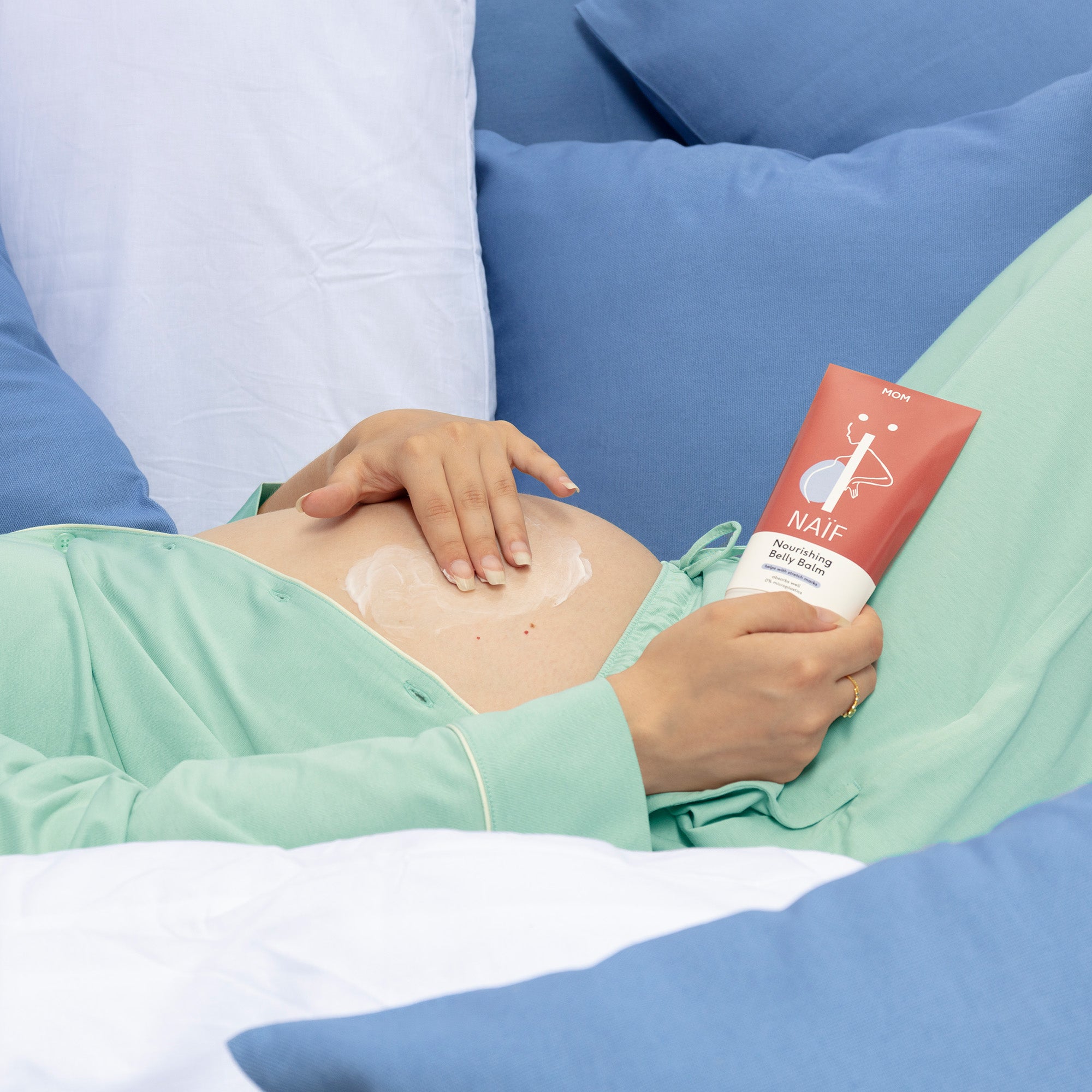
During pregnancy, a lot happens to your body. The extra production of the hormone estrogen makes your skin more supple, so it can stretch. Sometimes your skin can't keep up with the growth of your belly. Then stretch marks develop. Almost every woman experiences this to some degree, so these stripes are certainly nothing to be insecure about. How do stretch marks develop and how do you keep your skin well nourished? We explain it to you and give tips.
How do stretch marks develop?
Stretch marks develop when your body grows faster than your skin can handle. During pregnancy, but also due to a growth spurt in your youth or if you gain a lot of weight in a short time, you can get stretch marks. The growth causes small tears in your connective tissue that are visible from the outside. This can be visible on the belly, but also on breasts, legs and in some cases the arms. These stripes can initially be purple or red, but will usually lighten over time and take on your own skin color.
Can you prevent it?
Whether you get stretch marks or not is largely genetically determined. Therefore, you have almost no influence on preventing stretch marks. Creating a baby is no small feat, so it's also nothing to be ashamed of.
Of course, you can take extra good care of and support your skin during the growth process. Using an oil or balm helps keep your skin supple and nourished, and although it won't prevent stretch marks, it does seem to have a small positive effect. It also helps against any itching and can reduce a pulling sensation.
Tips
Below are a few tips that can help keep your skin supple and nourished during your pregnancy:
Hydrate. Whether you're pregnant or not, your skin and body need moisture for the production of new cells, but also for maintaining elastin in your skin. Help your body by drinking at least 1.5 to 2 liters of water per day during pregnancy.
Moisturize, moisturize, moisturize. Skin that stretches and comes under tension can become itchy or dry. It's a natural process, but one we can support a little. By not showering too hot and applying a nice pregnancy balm afterwards, your skin stays better hydrated and dries out less quickly.
Contrast showers. By alternating between warm and cold water, you stimulate blood circulation and strengthen your connective tissue. Massage your skin well during the shower and wear supportive clothing, such as pregnancy underwear, or pregnancy tights or leggings.
Exercise & healthy eating. It doesn't have to be intense sports, but staying active during pregnancy also promotes good blood circulation and a healthy weight. Also, nutritious and varied food can contribute to healthy skin: omega 3 fatty acids (in fatty fish such as mackerel, salmon, herring) and probiotics (in yogurt, kefir, pickles) appear to help with dry skin, for example.
Daily belly massage. It only needs to take 5 minutes, but this action stimulates your connective tissue and keeps your skin well nourished. Use a mild pregnancy oil for this. Besides being a nice moment for yourself, it's also a good way to make a connection with your baby in your belly.

