

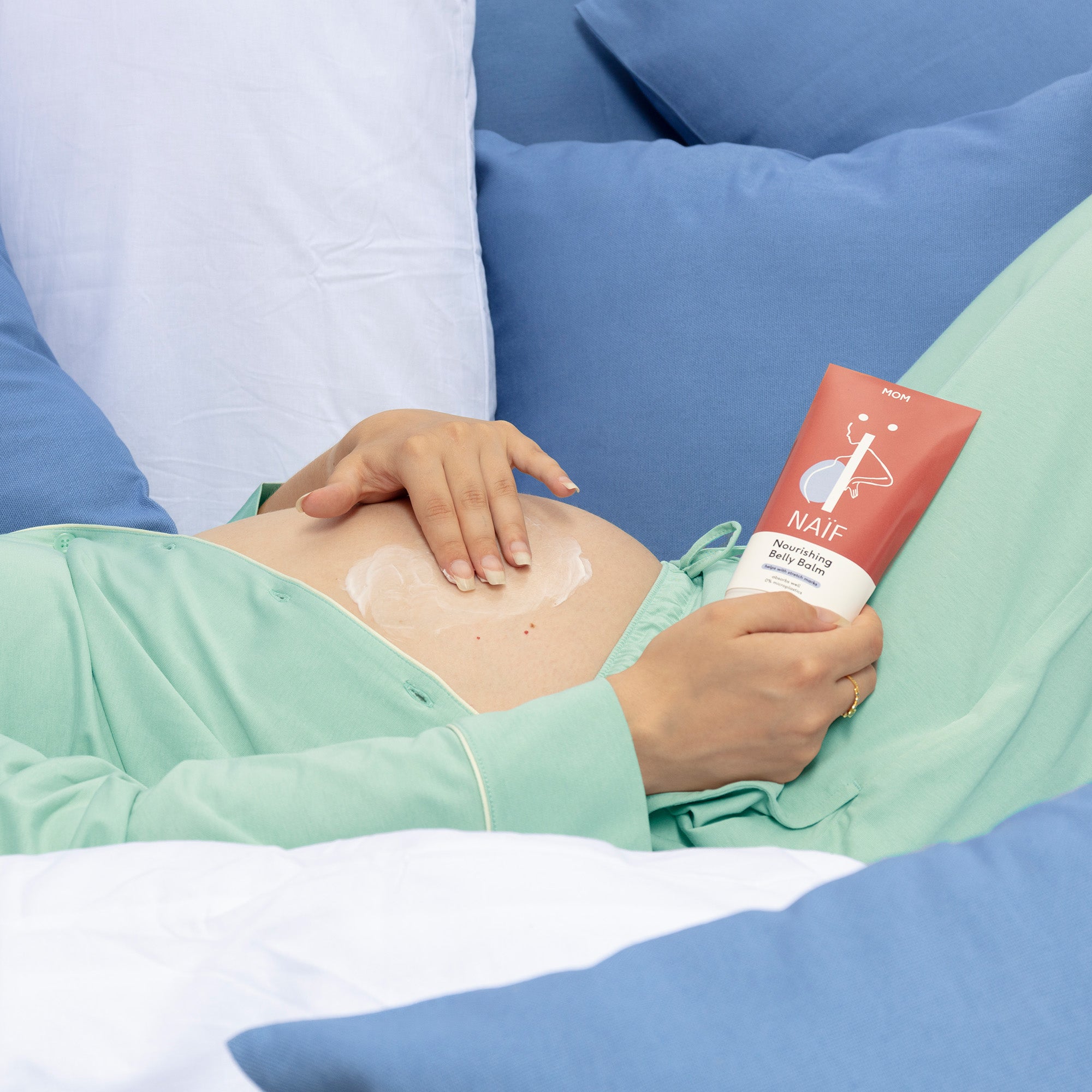
Being pregnant can be a beautiful experience, but it also comes with questions and worries. One of the things that may come up is what you can and cannot apply to your skin during your pregnancy. We've listed the ingredients you can safely use and which ones to better avoid.
Avoid: Retinol (Vitamin A)
Skincare products with retinol (also known as vitamin A) are not recommended during pregnancy. This is because retinol can penetrate deeply into the skin. What the exact effect of vitamin A is on an unborn baby is still not entirely clear. Therefore, it's best to skip it during your pregnancy.
Safe alternatives to retinol
Does this mean you can't do anything for your skin in the coming months? Fortunately, there are plenty of ingredients that are safe to use and still have an effective action. You can use niacinamide against acne and blemishes, and vitamin C to help prevent pigmentation and brighten the skin. Let that glow shine!
Avoid: Salicylic acid (BHA)
Another ingredient you should avoid for now is salicylic acid, also known as BHA or beta-hydroxy-acid. This active ingredient has an exfoliating effect and is also often used for blemishes and acne. According to the American College of Obstetricians and Gynecologists, salicylic acid in very low concentration (2%) can be safely used, but not all over the face. Because it's easy to make mistakes with this, most dermatologists and doctors still advise against using this ingredient during pregnancy. Better safe than sorry!
Safe alternatives to salicylic acid
Instead of salicylic acid, you can choose glycolic acid or lactic acid (AHA). Prefer not to exfoliate with active ingredients, but still want to remove dead skin cells? Then choose a gentle scrub or face wash based on sunflower oil.
Avoid: SLES
SLES is a surfactant that creates the foam in your shampoo, soap or detergents. Products with SLES can be irritating for some people or cause a tight feeling on the skin (source: RIVM). Due to hormonal fluctuations, your skin may already feel drier and tighter during pregnancy. SLES is safe to use, but if you have drier skin due to hormonal fluctuations during your pregnancy, you may want to avoid this ingredient for now.
Safe alternatives to SLES
Naïf skincare products - such as our shampoo and conditioner - are made with sodium coco-sulfate. This is a variant of SLS, with ingredients derived from coconut oil. This ensures that our products foam nicely while being gentler on the skin.
Avoid: Parabens
Many creams and shampoos contain parabens, which are used as preservatives. This is essential in skincare products because they prevent the growth of fungi and bacteria. Yet parabens have gained a bad reputation in recent years. Both scientists and consumers have been debating the possible hormone-disrupting effects of these parabens, and for example the risk of developing breast cancer.
At this moment there is insufficient information to determine whether parabens are actually hormone-disrupting substances and the link between parabens and breast cancer has never been scientifically proven (source: RIVM). The EU has even legally stipulated that the claim "paraben-free" can no longer be made by manufacturers because it unnecessarily gives a negative connotation to the use of these ingredients.
Alternatives to parabens
For now, it seems unnecessary to avoid parabens. Would you prefer not to have parabens in your skincare? You can recognize them on the ingredient list with the following names: methylparaben, propylparaben, butylparaben or benzylparaben. We prefer to play it safe, so Naïf products contain no parabens.
Oxybenzone
Many sunscreen creams contain oxybenzone. This non-mineral UV filter penetrates the skin and absorbs UV rays. Oxybenzone is safe for babies, children and adults but can cause skin irritation in some people (source: RIVM). Additionally, there is scientific research into the negative effects of oxybenzone on coral (source: Science of the Total Environment), a reason why this ingredient is banned in sunscreen in Hawaii.
Alternatives to oxybenzone
As an alternative, you can look for a mineral sunscreen with a UV filter based on zinc oxide. These sunscreen creams provide optimal protection against both UVA and UVB radiation, without really penetrating the skin. Zinc oxide forms a layer on the skin that reflects harmful UV radiation like a mirror, and thereby also minimizes the chance of a skin reaction.
This article cannot be used as a substitute for specialist medical advice. If you have any doubts about a product or ingredient, always consult a doctor.

