

Blog
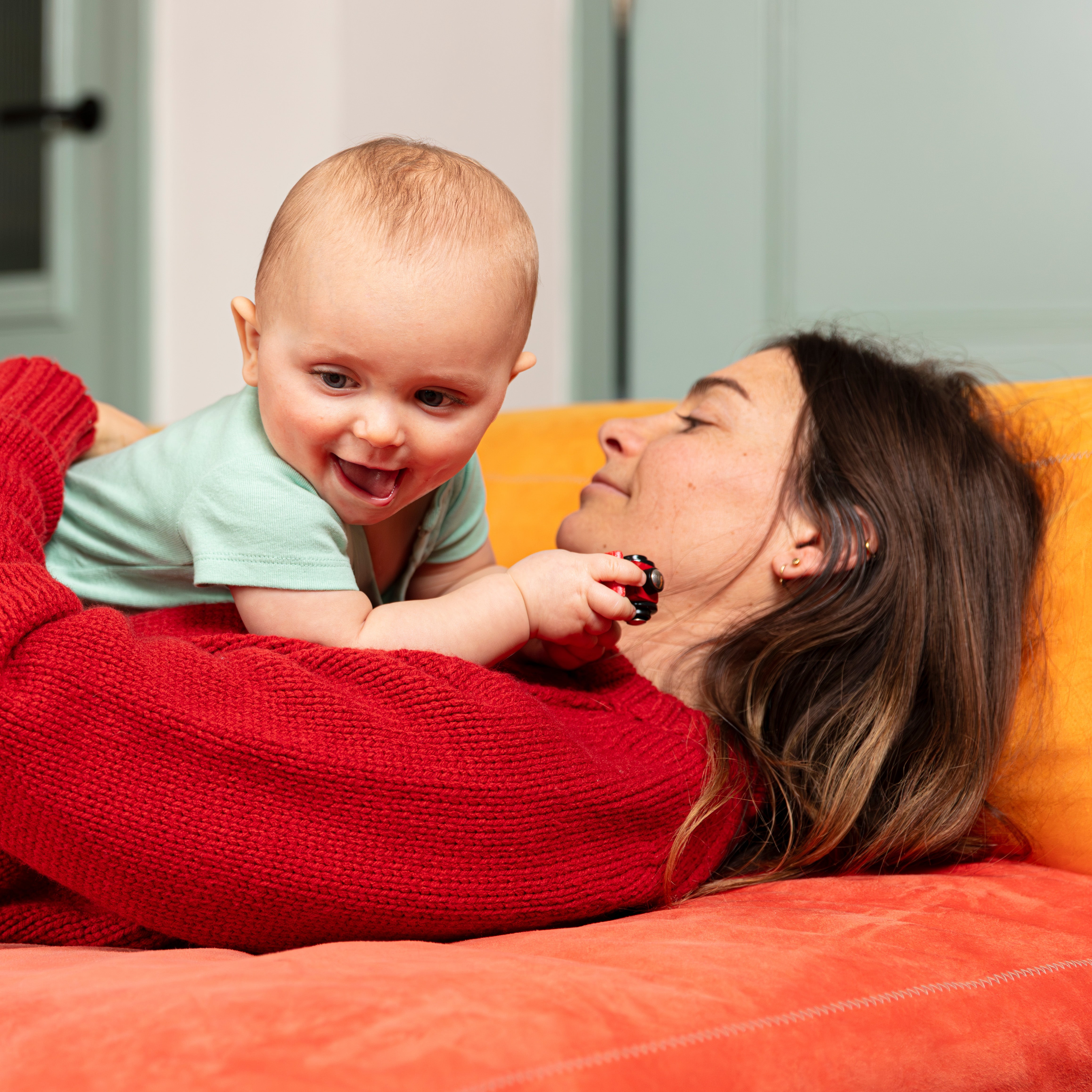

How to bathe your baby in 5 simple steps
Bathing your baby for the first time can be quite exciting. Such a small and delicate little one, and you're often doing it for the first time! Don't worry, together with Kraamzorg de Kraamvogel we've created a 5-step plan to make it all a bit easier. The first bathIn the first 24 hours, babies are not washed, not even in the hospital. This is to preserve the white natural skin layer, the vernix caseosa. It contains fats and proteins that give the skin an extra barrier in the first hours outside the womb. But what if your baby is already home? How often do you bathe him or her then? In the beginning, bathing 2 times a week is more than enough. After that, you can do it every other day or every 2 days.Step 1: preparationPlace your baby on a safe spot, such as in a baby nest or in the playpen. Set everything you need ready beforehand: in the bathroom the bath, a washcloth and a gentle bath oil or wash gel and a nice towel. In the room on the changing table, lay out a hydrophilic cloth, a gentle oil or cream, a clean diaper and clothes.Step 2: prepare the bathFill the bath with lukewarm water (37 degrees), add a few drops of mild bath oil and mix it with water. If your little one is already a few weeks old, you can also use a gentle baby wash gel on a washcloth to clean the dirtier spots or hair well. Undress your baby and, as long as he or she is not in the water, drape a hydrophilic cloth over the body. Newborn babies lose their warmth quickly, so an extra layer won't hurt.Step 3: in the bathLift your baby, support the head and buttocks well and place him or her slowly in the water. You'll see that your baby relaxes. Keep supporting the head - for example in the crook of your elbow - and use your other hand to wash your little one. Don't forget to clean the folds under the armpits, behind the knees and in the neck well with a washcloth.Step 4: drying & caringAfter 5 to 10 minutes, lift your little one out of the bath and lift him or her in the towel to the changing table. Pat your little one dry with the hydrophilic cloth and especially make sure the folds are dry, as leftover moisture can easily cause diaper rash. Water can also easily dry out baby skin, so after bathing you can apply a baby oil or a rich cream to the skin.Step 5: dressing & cuddlesPut a fresh diaper and clean clothes on your little one, and give him or her a big hug. Et voilà: you have a clean, lovely smelling baby!Extra tips Choose a fixed time for the bath, this contributes to a good rhythm for your child. See the care ritual that follows the bath itself as a moment of bonding - you can cuddle nicely with your little one while you rub him or her, or give a short baby massage. Also always check your child's bottom. Is it red or flaky? Then you can immediately apply a diaper cream.
Learn more

New: The First 1,000 Days Baby Box
Here it is then, the Babybox you didn't know you needed! Naïf, Etos and Ouders van Nu have joined forces to create a Babybox for everyone who is expecting a baby or has just had one. Filled with products that you can really use during the first thousand days. Read on quickly to find out what makes our Babybox so special. Perhaps by now or in the past you've already collected some other babyboxes. One thing is for sure, gifts are always nice when a little one is on the way. But often these packages are also full of advertisements, flyers or products that aren't suitable for your family situation. And that's a shame! That's why we've created a gift package together with Etos and Ouders van Nu, full of quality (full-size!) products that you can really use, such as a sleep guide and care products for sensitive skin, without advertising and unnecessary plastic clutter. We work together with partners who value quality and sustainability just as much as we do. Good for you and less harmful to the planet. And.. the Babybox is suitable for all (prospective) parents, regardless of gender and situation. Woohoo, that really makes us happy. To guarantee the quality of our Babybox, unfortunately it's not completely free. The package is worth approximately €120 (contents vary), but can be picked up at Etos for €4.95* (from 1 March!). But first request it via the registration form on our website. With each Babybox sold, we can also help parents who could use a little extra help. What's in it? We'll tell you more about that next week! We're launching it officially at the nine-month fair. From 1 March the Babybox can be picked up at Etos! You can already request it now via the button below.
Learn more
From wood to wipe: this is how our baby wipes are made
Baby wipes, one of the most used baby products. We are not surprised, because with 7 diapers a day and 2 wipes per diaper it adds up to an average of 14,000 wipes per child! That’s why we, at Naïf, think it is so important to strive for a world without plastic wipes. Naturally, we have already taken this step with our plastic free wipes. And more brands followed! But still, there is a difference. Most plastic free brands use viscose for their baby wipes, but ours are made from lyocell. We deliberately made this choice (although it is more expensive), because the chemical process during the production of lyocell is less harmful. But now you might wonder: from what, and how are these plastic free wipes made? Say no more.No plastic but..WOOD! Yes, you read that right. Our sturdy and soft baby wipes are derived from wood. Lenzing, the producer of the VEOCEL™ branded fibers we use for our wipes, have a strict policy for the wood they use. The raw materials come from responsibly managed forests. Now you might wonder, how is it possible that a rough material like wood becomes the soft and caring wipe that you know?The process: from wood, to pulp, to fibreFirst thing first: The wood and wood chips are turned into pulp by dissolving all other components. For this, Lenzing uses a chlorine-free process, which is more environmentally friendly than traditional bleaching methods. More than 99% of the dissolvent and the water that is being used during the pulping process is also re-used again!Pulping the wood is necessary to extract the cellulose from it. Cellulose forms the principal component of the cell wall of a plant. It is the same component that is being used to make paper or cardboard. VEOCEL™ fibers, the basis of our baby wipes, is what’s left after the wood is turned into pulp and the cellulose is extracted.But you can’t clean the dirty mess with a dry wipe made out of only VEOCEL™ fibers. That’s why we add extra softening and moisturising ingredients. Our original baby wipes are made with 99% water, but we recently also added lotion wipes to our assortment. These wipes are made with aloe vera and bamboo extract and are therefore even softer for sensitive skin. Here you can read more about the difference between water and lotion wipes.Used the wipe, and now what?Cleaned the mess and now you’re done with the wipe? Do not flush them down the toilet, but throw them into the garbage like you are used to! Although they are made out of circular* VEOCEL™ fibers, and therefore biodegradable and compostable under the right circumstances**, they can cause clogging in the toilet.*Circular means the product is made from naturally derived materials and will become part of nature again after it breaks down.**Derived from the natural material — wood, VEOCEL™ fibers are biodegradable in soil, freshwater and marine conditions and compostable under industrial and home conditions, and can fully return to nature.VEOCEL™ is a trademark of Lenzing AG
Learn more
What is the difference between a cream and an ointment?
That you need to hydrate your skin and your mini-me's skin (even with oily skin!), you hopefully already know that. Of course you use a nice cream for that. Or is an ointment better? And while we're at it... what is actually the difference between a cream and an ointment? After reading this blog you will know the answers! What is the difference between a cream and an ointment?Let's get down to basics: both a cream and an ointment contain oily substances that keep the skin moisturized. That's definitely good! However, an ointment contains proportionally more oily substances. An ointment is usually used for medical purposes, such as fighting the symptoms of a skin condition.A cream, on the other hand, is usually made on a water basis, like the rich cream from Naïf. Creams with mainly natural ingredients are suitable for sensitive (atopic) skin, but are not a medical treatment. This makes the consistency of a cream lighter. This makes a cream suitable for both dry skin and oily skin.Does ointment or cream absorb better into the skin?An ointment is made on an oil basis. Therefore, an ointment will hardly penetrate the skin, but will rather remain on the skin. This gives the active ingredients a chance to do their work optimally.Because a cream is usually made on a water basis, a cream penetrates the skin more easily than an ointment. The water in the cream makes it light and cooling, and creams can therefore also be used well to soothe mild skin irritations.Is an ointment or cream better?Whether you prefer an ointment or cream mainly depends on your own needs and wishes. Are you looking for a (medical) product that stays on the skin and leaves a greasy layer on the skin? Then you've come to the right place with ointments.If you're only looking for an ointment or cream for sensitive (atopic) skin, then a cream based on natural ingredients is often sufficient. It will also absorb faster and have a soothing effect on the skin. A nice scent on a cream can be pleasant, but is not necessary for good results. If you're looking for a cream without added perfume, take a look at our 0% perfume range!
Learn more
How do I wash and take care of my baby's hair?
Some babies are born with a head full of hair, while others don’t have any. It doesn’t matter if your mini has lots or little hair, taking good care of the hair and scalp is always a great idea. But where to start? We’re here to help you find the perfect routine for your little one! A newborn baby is often covered with a white layer of grease. This layer is also called vernix and protects your baby against infections during pregnancy. After birth it’s best to leave the vernix alone until it disappears on its own. For some babies it takes a couple of hours, for others this may take a few days. When the vernix has been absorbed by the skin you can start washing your baby! When and how often? Your baby’s hair does not need shampoo, the first few months water will do just fine! Feel like this isn’t enough? You can use the water of the bath, with added bath oil, to gently cleanse the scalp and hair of your baby. When your mini’s hair starts growing a bit more it might be time to start using shampoo for washing. Once a week is more than enough! Use a shampoo that’s specifically made for babies, with mild ingredients that are mild for the eyes. Even if your baby doesn’t have hair yet, you might want to switch to shampoo eventually, because it also cares for the scalp! Why baby shampoo? A special shampoo for your little one is a must. Why? Baby shampoo has a lower pH value than your own shampoo, which is what you want for the sensitive baby skin. Naïf baby shampoo also does not contain SLES, mineral oil and microplastics, is made with ingredients of natural origin. Our 2-in-1 Shampoo & Body Wash has no perfume and is even AllergyCertified! Extra soft and mild care for your baby. Washing hair: this is how you do it! A shower or a bath: it’s up to you! With a newborn baby a bath might be easier, because you have your hands free. It’s important to just go with what works best for you and your baby! Step 1. Wet the hair carefully. Make a bowl with your hands and scoop a little bit of water over your baby’s head. Step 2. Add a little bit of shampoo to your hands and massage it into the hair and scalp. Step 3. Rinse and done! Always make sure to keep shampoo out of your little's eyes, even if you use a mild shampoo for babies. Did you know a baby only blinks twice a minute? Compared to our fifteen times a minute the chance of water or shampoo getting into their eyes is a lot bigger! So, make sure to protect the eyes while rinsing the head. Put a washcloth on the forehead to keep the water out for example. If your baby is laying in the tub you can use your hand to carefully rinse the product out of the hair. Clean and done? Time to dry off! Be careful while drying the sensitive baby skin, it’s up to five times thinner than adult skin! Instead of rubbing, you’d want to dab the skin and hair dry. What to do with cradle cap? Does your baby suffer from cradle cap? No worries, lots of kids do! This kind of eczema often starts between the sixth and eighth week after birth. It usually also disappears again before your mini turns one. You can take care of cradle cap by using baby oil and a soft brush to massage the scalp. Wash the hair afterwards following the steps above. More good care Parent of older kids or a baby with an untameable coupe? You might need a little more help. For soft hair that’s easy to comb through we've got the tip for you: hair lotion! A real multi tasker, if we say so! Hair lotion can help with knots, fluffiness and taming the wildest curls. And it smells divine! Good luck with your babies new and complete hair routine!
Learn more
Baby milestone: When will my baby roll over, crawl, tiger crawl and sit?
Oops, there goes your baby-baby. From a small human that lies, eats, cries and laughs to a child that slowly starts standing up. Off, into the wide world. But, when does your baby actually start crawling? And of course also rolling over, tiger crawling and sitting? Age & CrawlingMost babies start crawling somewhere between 7 and 10 months. But it's also possible that your little one starts earlier or later, or simply skips the whole crawling phase and goes straight from sitting to walking. No worries, every baby is unique, so every development is different too. The pre-crawling stageLet's start at the beginning, because your little one has been preparing for months! First, gross motor skills are trained. At around two months, he discovers his hands and feet. Around three months, an object can be held. And don't be surprised if your baby suddenly puts his foot in his mouth. Funny to see. During this period, place your baby often on a play mat, so there is space for development and movement and schedule tummy time. This trains the back and neck muscles. Around six months, your little one starts rolling over. Whoops, from belly to back. The other way around is still often difficult. Keep in mind that your child can now also roll over in his crib and crawl up and/or down.Pivoting is something you learnWell, not really learn, it happens naturally. Around nine months, your child can roll over completely and also rotate on his axis. This is called pivoting. From here, your baby learns to move forward and backward. Aha, the tiger crawling era has begun! During tiger crawling, the side muscles are strengthened, which is useful for crawling.There goes your baby!Is your baby (not so baby anymore) suddenly in a crawling position during tiger crawling? Then crawling is near. Sitting will also not take long. Sometimes your baby crawls before sitting and sometimes sits before crawling. It's all good.Crawling takes energyYou can stimulate crawling by, for example, placing a toy just out of reach. Oh and a surface that is rough (such as sisal carpet) is not very pleasant for little legs and knees. You have some really nice crawling suits and leggings of course. Reason to shop at the same time (sustainably though!). Crawling does take a lot of energy, so a nice warm bath before bedtime is nice. Especially with a nourishing bath oil that keeps the legs soft and supple.
Learn more
Hooray! Our new refill packs are here
Did you see yet? Our new refillpacks are here! After Naïf Wash Gel and Shampoo we now added our Bath Foam for baby and kids to the refill family. And that is not all! We want to introduce you to our first refill in the adult category: our Shampoo! Now you can use your favorite care products while being sustainable! Great for the planet and your wallet! Worry-free bathing has just become even more worry-fee. Did you know our new refill packs save up to 76% plastic? And of course there are still no microplastics and SLS added, instead we use a foaming agent with derivatives of coconut fibre. Lots of bubbles and fun, milder for the skin!Why refills are the futureAt Naïf we think re-using and refilling existing packages are the future. But why? You may ask. Well, we love to tell you. As mentioned before refilling saves plastic, For our Bath Foam this is 68%, while our Wash Gel and Shampoo refills use 76% less plastic. Why the difference? Our Bath Foam bottle does not contain a pump. Producing a refill saves 70% on CO2. Wow! Refills also save a lot of CO2 during transportation. A truck with empty Doypacks (yes, that is how our refill packs are called) replaces 20 (we cannot believe it!) trucks with bottles. And that obviously saves a lot of emissions. In short, by refilling your original container you can save a lot. And that is how we can work towards a future in which our kids can grow up worry-free.At Naïf we want to change the world of personal care. We believe that it can and has to become more sustainable. That is why we continuously work on improving our products and everything we do. Our dream? Climate neutral en plastic free products. Baby step by baby step. To make sure our products are nog only good for your baby, but also for your the babies of your babies baby.
Learn more
The saving of 4 million PET bottles
Hooray for sustainability and a cleaner world! May plastic-free is in full swing and we have excellent news! Did you know that after the launch of our plastic-free wipes in 2020, we saved more than 4 million PET bottles? Together with you! And we can be quite proud of that together! Baby wipes: you can hardly do without them during the first years of your mini's life. However, they are often full of polyester and viscose, which are really just expensive words for plastic. A pack of wipes contains almost as much plastic as 2 PET bottles. On average, a parent uses about 14,000 wipes per child, which amounts to about 280 packages of wipes and about 475 plastic bottles. WOW! These plastic baby wipes are the "perfect" example of disposable plastic. Research by the Dutch NGO Clean Rivers shows that 21% of all litter found in Dutch rivers and riverbanks consists of wet wipes. On average, 12 wipes are found per 100m², causing damage to the environment and aquatic life.But we can do better. And that's exactly why we launched the first plastic-free wipes in the Netherlands in 2020. Since then, together with their customers, they have saved more than 4 million PET bottles! The wipes are made from wood pulp. These VeocelTM fibers are sustainably produced from wood from sustainable forests. Whereby also less CO2 is emitted. Win-win in other words!And the best part? Other brands have followed suit: now 20 percent of the wipes market is plastic-free. Good news, because that's how we change the industry, one diaper at a time. But to really make a difference, we have to go one step further. Whereas most brands use viscose fibers, Naïf chooses the more expensive lyocell as its raw material. Both materials are made from wood pulp and are biodegradable, but lyocell fibers do not require a chemical process like viscose fibers. This means less (harmful) solvents and water is used and wasted. In short, choosing lyocell has less impact on the environment.
Learn more