

Blog
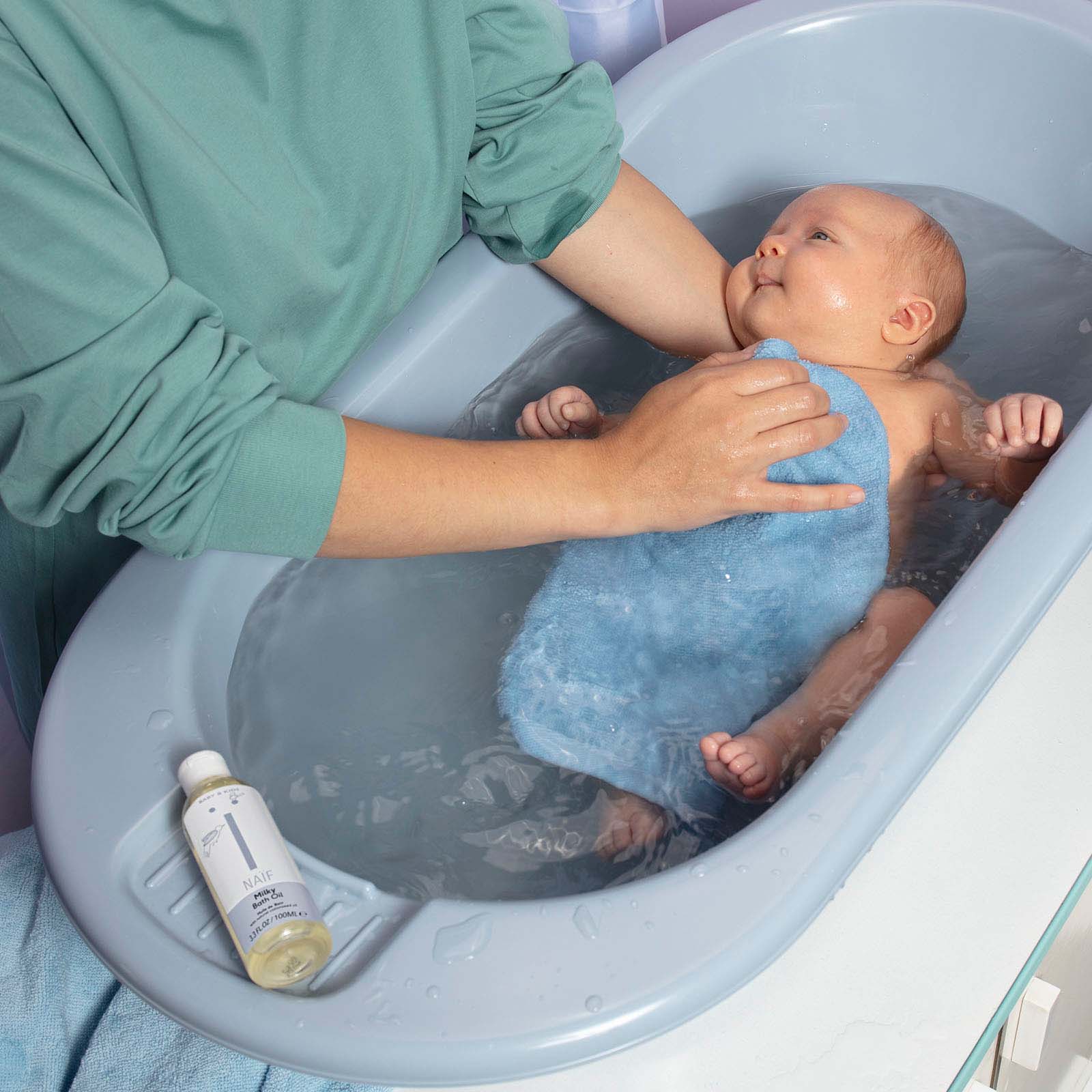

The top 5 worries every parent has about baby care (and the answers that actually help)
As a (new) parent, you have a lot on your mind. And call us Naïf, but we believe you should be able to use care products without worries. Of course, that's easier said than done, because you want the best for your baby. Where to start? We're happy to help! What care products do I need for my baby? Good question, because when you look in the stores there's just so much to choose from. No worries, because a baby really doesn't need much. At Naïf we're big fans of just the basics: bath oil, baby oil and zinc cream. Oh.. and don't forget the stacks of baby wipes, you really don't want to be without those. After a few weeks, you learn what your baby needs. For dry skin, you'll want to give some extra love with a body lotion, rich cream or baby balm. Does your little one have a full head of hair, then a baby shampoo might be handy. As your kids get older, you can make the care routine more and more fun. Replace the bath oil for example with bath foam for a bath full of bubbles and fun. Want to know more? We previously wrote a comprehensive blog about what you really need, and what you don't. What are good ingredients and which ones should you avoid? Good ingredients are ingredients that really contribute to the best care for your baby. Think for example of plant-based oils for hydration and glycerin to support dry and damaged skin. Also antioxidants such as vitamin E (the official name is tocopherol) and anti-inflammatory ingredients such as shea butter, panthenol, aloe vera and zinc oxide are a good addition to your baby care. On the other hand, you'll want to avoid ingredients that can be harmful to your baby or the planet. Think of microplastics, mineral oils and ingredients that may contain 1,4-dioxane such as PEG and SLES. In this blog we already wrote about everything you do and don't want in your baby care. What should you look for when buying baby wipes? As a parent, you go through stacks of baby wipes. To be precise, about 14,000 PER CHILD! Something that is used so often on your baby's skin must of course meet a number of requirements. First of all, they must of course do what you buy them for: cleaning baby bottoms (and nose, hands and table because multi-functional, that's what they are). What you want is a moist wipe, but not too moist. It's also important that they're nice and sturdy, because you don't want to get dirty hands. It just happens that 94% of the Ouders van Nu testers are satisfied with the sturdiness of Naïf's baby wipes! Also important: how does your baby's skin react to them? Does your baby get a rash from using baby wipes, then it's time to look for something new. To prevent irritation, you may want to check the ingredients beforehand. Is the ingredient list as long as your receipt after you've done a week's worth of shopping? Then leave them and look for baby wipes with less ingredients. The fewer ingredients, the lower the chance of irritation. There are a number of ingredients you'll want to avoid when it comes to baby wipes, because they're simply not necessary to clean your baby's bottom properly. Alcohol is a good example of something you don't want to use on the sensitive skin around the diaper area. You'll also want to avoid fragrance, because that's really not necessary to get things clean. If it's up to us, plastic doesn't belong in baby wipes either. Unfortunately, the vast majority of baby wipes are made from it. If you think it's important to save on plastic, then the choice for a baby wipe without plastic is quickly made. You can recognize them by the "no plastic inside" logo on the packaging. Should I apply sunscreen to my (newborn) baby? The short answer is yes! You should also apply sunscreen to your (newborn) baby. And yes, that starts with the early spring sun. The first step, even more important than sunscreen, is to keep children under 1 year out of the sun as much as possible. Seek out shade or create it yourself with a parasol or sun shade. Step two is protective clothing. Make sure your baby wears light, but protective clothing. There's even special UV-protective clothing, but that's not necessarily required. Want to know how protective the clothing is, then hold it in the sun for a moment. If you can see through it, it doesn't do much. If it blocks the sun, then you're good. And then comes sunscreen! Apply SPF 50 sunscreen generously to any skin not covered by clothing. You can choose a cream, stick or spray. Just make sure it's not a misting spray. Those evaporate in the air and very little ends up on the skin. Plus, your baby can also inhale this type of spray, which is of course not the intention. A liquid spray (like ours) that doesn't mist can be used! With babies, you might prefer to spray it on your hands first and not directly on the skin. How much exactly do you need to use? Just a nice thick layer. Don't forget to reapply every two hours and also cover the often forgotten spots, like the ears, nose and lips well. More sun protection tips? We spoke with dermatologist Elodie Mendels about how to prevent sunburn. Help my baby has a rash, what should I do? A rash on your baby is never fun, but it does happen often. That sensitive skin sometimes gets a real beating. To fix the rash, it's of course important to know exactly where it comes from. Diaper rash Diaper rash is a form of rash that is common in babies. No wonder either, that wet diaper is a breeding ground for bacteria. You recognize diaper rash by the red skin and sometimes, if it's really bad, there are also open wounds. How to prevent and cure it? You can preventively apply zinc cream. The zinc oxide in this cream protects the skin against moisture by forming a barrier. It also has anti-inflammatory and antibacterial properties and thus helps with the healing process. It's also important to keep the skin clean and dry. Taking the diaper off from time to time and letting your baby play on an absorbent mat ensures that the skin can dry properly. Dry skin or eczema Your baby can also suffer from dry skin, or even eczema. What do you do then? It's mainly important to keep the skin well moisturized. For this you can use a rich cream or baby balm. A lotion is often not enough for dry skin or eczema, because lotion consists largely of water, it is absorbed too quickly by the skin. You'd rather want a fat-based product, so that it doesn't sink in immediately, but instead creates a protective layer on the skin. Baby acne You might not expect it, but your baby can also get pimples. Baby acne is common after birth and has everything to do with your hormones. Yes really! Fortunately, it also goes away once those hormones are out of your little one's body. Are you breastfeeding? Then baby acne may last a bit longer, because your milk also contains hormones that can cause pimples in your baby. Cradle cap Then there's cradle cap. That thick greasy and yellowish rash that often appears on the head of a (newborn) baby. Where does it come from? The vernix layer that your baby gets at birth. When that dries out between the hairs, cradle cap forms. If it lasts longer than four weeks, it's no longer called cradle cap but seborrheic eczema. Both will go away on their own and is otherwise not dangerous. If you think it looks unsightly, you can smear the scalp with baby oil and try to comb or scrape off the cradle cap after half an hour. If this doesn't help, there are also special creams that can help with cradle cap Other rashes With other rashes, such as chickenpox, impetigo and measles, it's always wise to visit your doctor. They can help with the right treatment for your situation.
Learn more
How to give yourself a belly massage during pregnancy?
A belly massage during your pregnancy provides peace and quiet. Literally and figuratively. During your pregnancy, a lot happens in your body, but also in your mind. To do lists, preparations, not feeling great physically or mentally. To not lose yourself, it can be good to check in with yourself and your baby. With a belly massage you do that naturally, and you also take good care of your skin. Read below how to do it. About Jill van der Veen We spoke with Jill van der Veen, who started her own platform Mom • Me • Soul in 2014. Her mission is to provide relaxation to pregnant women with a focus on good recovery, so she can live from her true potential and stand in her power. A belly massage is not only practical to keep the skin supple and soft, but mentally it is also nice to make a better connection with the baby. 'The biggest wish I hear from pregnant women is; I want to enjoy optimally, or even more than the previous pregnancy,' Jill says. ''Massaging your belly is one of the small moments when you make contact with the baby and thus consciously experience your pregnancy and can enjoy it even more. And it's precisely small moments that can contribute to that. It only takes 5 minutes a day and can even be done standing or before you go to sleep, in bed. The more often you do it, the easier you can make contact with the baby. And it contributes to self-care; keeping your beautiful skin soft and supple, and creating a moment of peace. Slowly you will build a routine, and you can also take this with you once the baby is born to bring you both into relaxation. This is a gift for yourself, your baby and your beautiful, powerful body.' Belly massage step-by-step plan Step 1. Make yourself comfortable; phone off, dim the lights and put on nice music. Get into a comfortable position, on the couch for example, with your back slightly raised and enough pillows to support your back completely. It is important that there is no gap between your back and the couch. Finally, place a thick pillow under your knees so that your lower back is relieved. Step 2. Think of your intention. Do you want to experience more relaxation? Or take a moment to think about what's happening in your belly? Maybe you can give a wish to your unborn little one. Step 3. Warm your hands and let the energy flow through by rubbing your hands together. That also feels nicer on your warm belly. Step 4. Before you start massaging, make contact with the baby; place your hands on your belly, talk in your thoughts or out loud, or sing a song. If something is on your mind, share it with the baby. Or tell what you're going to do and what your intention is. Step 5. Apply a nice pregnancy oil or balm to your hands, warm it up between your hands and then rub it over your belly. Step 6. Vary with different grips: circles clockwise, counter-clockwise, zigzag, stroke downwards, stroke along the groin. Step 7. Repeat your intention and massage to the rhythm of the music.
Learn more
How do you protect your skin against harmful sun rays? We asked dermatologist Elodie Mendels what to pay attention to.
To prevent sunburn, it's important to protect yourself well. Shade, sleeves, sunscreen. We asked dermatologist Elodie Mendels how best to prevent your skin from burning in the sun and what to pay attention to. Here are some great tips so you can go out well protected this summer. First of all, who is Elodie? Elodie Mendels is a dedicated academic pediatric dermatologist at the Erasmus MC-Sophia Children's Hospital. This means she helps children and their parents/caregivers with the treatment and management of various skin conditions. In addition to her work in practice, she also enjoys and finds it important to inform people through other channels with tips, tricks and solutions for skin problems. Earlier we talked about sunburn and how to prevent it. You mentioned avoid, cover and apply. How exactly do you do that? "How you do it exactly depends on each child, but the most important rules are: apply half an hour beforehand, so the sunscreen can dry well and a protective layer forms. Then repeat it every two hours. Every child is different, but generally they're more likely to go along with it if you involve them in the routine. Let them play with the stick or tube, for example, or apply it to each other. It's important to make sunscreen application really part of the daily routine." "Also apply well under clothing, especially under thin rompers or clothing made of thin, loosely woven and light fabrics. With normal, tightly woven clothing this is not necessarily necessary, but then it is important that you apply well under the edges of the clothing. This is one of the most forgotten spots, along with: the tip of the nose, the chin, around the eyes, the edges of the ears and the lips. So don't forget these spots either!" "You'd better avoid sunscreen spray for children. By that I mean a spray that mists in the air like perfume. These don't provide good protection because it disperses and little reaches the skin. It can also be dangerous to inhale the spray. Of course you can use a lotion-like spray that you spray on the skin and spread yourself." What often goes wrong when protecting babies and kids from the sun? "There are a few things that are often found difficult or forgotten during application. It can be difficult to integrate sunscreen application into the daily routine and apply it in time before we go out in the sun. Also, it's not always repeated every two hours or after swimming, while it's really important to repeat it. Sunscreen is wiped off quickly. Really don't forget to apply those spots I mentioned earlier! Apply a thick layer too, because a thin layer has much less effect. And finally, between 12 and 3 o'clock it's best to stay out of direct sunlight, although this can sometimes be a challenge. It's important to keep babies up to 1 year old always out of the sun." How thick should you apply then exactly? "People often think that with SPF30 you can stay in the sun about thirty times longer without burning. That's not quite how it works. The effectiveness of sunscreen SPF is determined in a laboratory. A specific amount of cream is used to test this. In practice, you never apply your sunscreen as thickly as in lab tests. How thick you should apply exactly is always difficult to explain. There are lots of tips, for example how many teaspoons you should use on which body part, but in the end no one really measures it that way. I used to say: apply as thick as a peanut butter sandwich, but everyone spreads a sandwich differently, so that advice doesn't really help either. It just comes down to applying it nice and thick and definitely not too thin. And repeat it every two hours and after swimming, then you should be good to go." Don't you clog the skin when you apply such a thick layer of sunscreen? "You can't clog the skin, you're just putting a layer on top. However, sunscreen residue can end up in your pores, causing inflammation and for example a pimple. If you're prone to that, buy a sunscreen that's a bit less oily. There are also anti-acne sunscreens." "In principle, you can wash most sunscreens off with water in the shower or bath. You can also use a facial cleanser or makeup remover. If you can't get your sunscreen off completely, you can also use baby oil." Does it matter what kind of sunscreen you use? "The most important thing is that you use sun protection that you like to apply. If you like applying something, you're much more likely to use it often and well." "There are two different types of filters in sunscreen: mineral and chemical*. A mineral sunscreen has a UV filter made from a natural product, such as zinc, but it's still processed with a chemical process in the laboratory. Chemical UV filters are made in a laboratory. Some people prefer not to use chemical filters anymore, because there used to be a number of UV filters that turned out to be harmful, like oxybenzone. Those have long been banned in the EU and the fear of chemical filters is unfounded. Both mineral and non-mineral filters remain on the skin, only mineral molecules are much larger, which is why mineral sunscreen is often slightly thicker. Sometimes the molecules are made smaller into nano-particles so no white haze remains and the cream spreads better**." "Whether you use mineral or chemical filters doesn't matter, the most important thing is that you feel comfortable with what you apply. In the Netherlands you need at least SPF30, but SPF50 is even better. Especially because people often don't apply thick enough. Also choose a sunscreen with UVB and UVA filter. For young children, preferably use sunscreen without fragrance, they really don't need that." "Water-resistant sunscreen stays a bit better in place because components are added that make it stick better to the skin. But it's definitely not waterproof. That's why it's important to reapply after swimming or sweating." "In short: apply a cream you like, minimum SPF30 and with UVA and UVB protection." *At Naïf we prefer to call this non-mineral, why exactly you can read here. **At Naïf we don't make the molecules smaller into nano-particles. That makes our sunscreen non-nano. How it works exactly with nano and non-nano sunscreen you can read here.
Learn more