

Blog
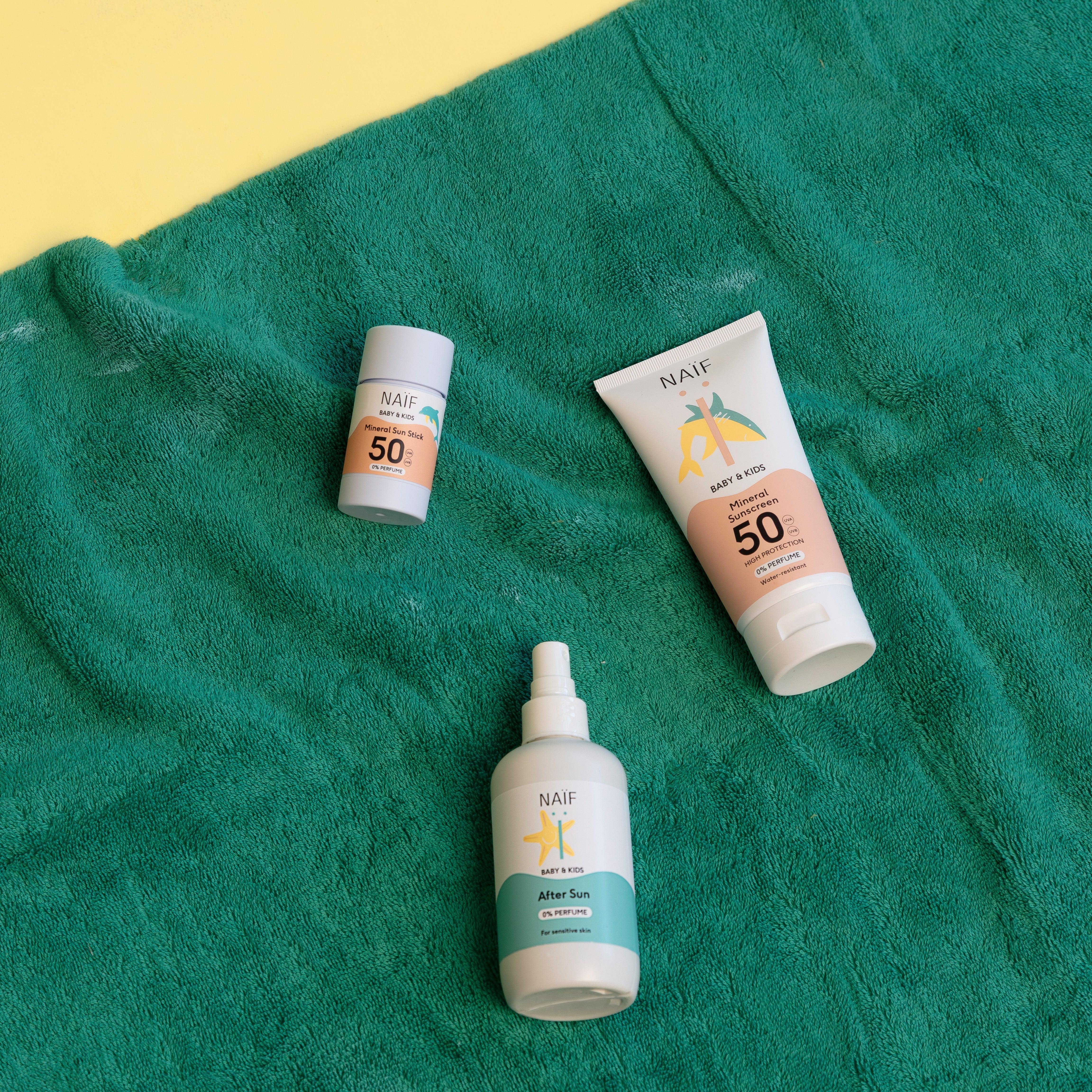

How can we guarantee the SPF in our sunscreen?
When you think about sunscreen, SPF (Sun Protection Factor) is probably on of the first things that come to mind. Protecting your skin against harmful UV radiation is very important, so we want to explain to you how we can guarantee an effective SPF in our sun care products. Let's get into it! Mineral sunscreenFirst things first; we made the conscious choice to create a mineral sunscreen. Although mineral sunscreen is pretty common in other countries, the Dutch market still offers mostly traditional sunscreen with non-mineral filters (better known as chemical). Mineral sunscreen with a zinc oxide based filter like ours lays a physical barrier on top of the skin that reflects harmful UV radiation. Non-mineral filters penetrate the skin and then cause a chemical reaction where the UV beams are absorbed instead. You can find more information about UV filters here. Because these filters penetrate the skin there is a bigger chance on skin irritation and it takes longer for the sunscreen to do its job. There are also some ingredients in non-mineral filters that can cause harm to coral reefs, and we don't want that, do we? Zinc and SPFZinc oxide based sunscreen has another perk. The amount of added zinc is a direct reflection on its protective properties. To reach an SPF of 30, a product needs to contain 21% zinc oxide for example. Just to be sure we even try to add a little more zinc oxide to our products. Our 2024 formula additionally also contains not one, but two extra boosters. Good protection guaranteed! LabtestenAnd then what? Although this percentage is a good start, we of course also test our formula extensively before we start production. We do this at an independent laboratory, Helioscience, specialized in mineral sunscreen. In vitro and in vivo There are to different ways in which sunscreen can be tested: in vitro and in vivo. All our formulas are first tested in vitro. This means we look at the product in a more technical way. For traditional sunscreen they look at the heat that is released, because non-mineral UV filters absorb the sun rays and convert them to heat. But that not how mineral sunscreen works. A zinc oxide based UV filter adds a protective layer on top of the skin that reflects UV radiation in stead of absorbing it. No heat released. That's why it's important to test mineral sunscreen differently than non-mineral sunscreen. Helioscience knows exactly how to do this!Only when the in vitro tests are positive we start with in vivo testing. These tests are done on actual skin, of real people that is! A small portion of the skin of 10-20 people is exposed to controlled sun beams. The reaction of the skin is measured to see how effective the SPF is. They check how long it takes for the skin to get red. When it takes 30 times longer than usual it means the product has SPF 30. In vivo tests are always done on people with different kinds of skin types and skin conditions. ProductionIf you want to sell products, they need to meet the strict regulations of the Nederlandse Cosmetica Vereniging (Dutch Cosmetic Association). Only when we know for sure our product meet their guidelines we start producing our sunscreen. Apart from strict laws, we also have terms and conditions that are important for us as a brand: would we use these products for our own kids? If the answer is yes, we start production. Are there any doubts? We decide against producing the product. This way we ensure that we only launch products that we are really proud of.TransparancyAt Naïf we want to change the personal care industry, because let's be honest, we can and have to do better. We believe change starts with honesty and transparancy. That's why we decided to share the results of ALL our sunscreen tests. And remember, these are done at a independent laboratory. We think it's important that you know what you're putting onto your skin!
Learn more
We have changed the formula of our sunscreen!
At Naïf we are all about protecting families from the harmful effects the sun can have on our skin. We believe that, by sharing knowledge and making good sunscreen, we can really help with creating a generation that knows how to take good care of their skin. To offer even better protection we took a good look at our sunscreen formula and we decided to make a little change. Let us tell you all about it! In 2015 Naïf was the first brand in The Netherlands with a mineral sunscreen, because we believe that this is the best option to protect your baby. Because we were the first, we learned a lot and will continue to do so. Our goal is creating a mineral sunscreen without making compromises, that is safe (for human and planet), but also just as user friendly as traditional sunscreen products. That is why we evaluate and improve our formula every year again, no exception this year. Mineral sunscreen In our sunscreen we use a non-nano zinc oxide based UV-filter (if you want to learn more about UV filters you can do that here). Zinc oxide is a mineral that creates a protective layer on top of the skin that reflects harmful UV radiation. You can compare it to a mirror! Because zinc oxide does not penetrate the skin, but stays on top, chances of an allergic reaction are minimal and it offers immediate protection. Annually 14 million kilograms of sunscreen ends up in the ocean. Oxybenzone and octinoxate based UV filters are proven to be harmful to coral reefs. That’s why we stay away from these, and all ingredients that are a potential risk, and we chose to create a mineral sunscreen with a zinc oxide based UV filter. Zinc oxide has many advantages, but there is one disadvantage: it can make the skin a little dry. This is exactly why it’s the main ingredient in our zinc cream which helps with diaper rash! To make sure the amount of zinc oxide in our sunscreen does not get too high we always add a booster made out of pongamia seeds. This booster enhances the power of the zinc oxide, so we can keep the amount of zinc in our sunscreen to a minimum. Our changed formula As we said before, mineral sunscreen is not always the most user friendly. It can be a bit harder to apply and can leave a white cast on the skin. It’s a compromise you have to make in exchange for a product that offers immediate protection and is mild for (sensitive) skin. But we hope to reduce this compromise a little every year. That’s why, in the last years, we worked on easier application and less white cast. This year we added a second booster. This booster is made from a new generation (non-mineral) UV filter: bis-Ethylhexyloxyphenol Methoxyphenyl Triazine. This UV filter is lab-made, but does not penetrate the skin and offers protection from the outside. Based on our current research, there are no documented effects on marine life due to this ingredient. The UV filter bis-Ethylhexyloxyphenol Methoxyphenyl Triazine is already being used in The Netherlands, but the combination with our mineral zinc oxide based UV filter is unique! By combining the zinc oxide with the booster we can guarantee a high quality SPF and a safe sun experience for you and your family! But wait, does this mean that our new formula is better than last years? Not necessarily. It just depends on how you look at it. Both formulas do exactly as promised: immediate and good protection against the sun. The yearly improvements make our sunscreen easier to apply and more nourishing. Also this year. Let us know what you think! We know for sure that all our sunscreen protects as promised, because they all passed their tests. Woohoo! We let the testing be done by an independent lab, specialised in mineral sunscreen. Just so you know it’s real good stuff.
Learn more
New: The First 1,000 Days Baby Box
Here it is then, the Babybox you didn't know you needed! Naïf, Etos and Ouders van Nu have joined forces to create a Babybox for everyone who is expecting a baby or has just had one. Filled with products that you can really use during the first thousand days. Read on quickly to find out what makes our Babybox so special. Perhaps by now or in the past you've already collected some other babyboxes. One thing is for sure, gifts are always nice when a little one is on the way. But often these packages are also full of advertisements, flyers or products that aren't suitable for your family situation. And that's a shame! That's why we've created a gift package together with Etos and Ouders van Nu, full of quality (full-size!) products that you can really use, such as a sleep guide and care products for sensitive skin, without advertising and unnecessary plastic clutter. We work together with partners who value quality and sustainability just as much as we do. Good for you and less harmful to the planet. And.. the Babybox is suitable for all (prospective) parents, regardless of gender and situation. Woohoo, that really makes us happy. To guarantee the quality of our Babybox, unfortunately it's not completely free. The package is worth approximately €120 (contents vary), but can be picked up at Etos for €4.95* (from 1 March!). But first request it via the registration form on our website. With each Babybox sold, we can also help parents who could use a little extra help. What's in it? We'll tell you more about that next week! We're launching it officially at the nine-month fair. From 1 March the Babybox can be picked up at Etos! You can already request it now via the button below.
Learn more
A sunny collaboration: Naïf and the Huidfonds join forces
That we find sun protection important, that should be clear. And now we're taking another step further in our mission to protect everyone from the sun. We are proud to tell you that we have officially become partners with the Skin Foundation. Together we will work over the next three years to raise more awareness about the importance of sun protection by spreading the message: protect, cover and apply. With this partnership we want to help parents and caregivers protect themselves and their kids well against the harmful effects of the sun. And that goes beyond just applying sunscreen! We hope to give parents more awareness, knowledge and tools on how to safely enjoy the sun, so they can confidently look forward to summer. "At Naïf our mission has always been to help parents take good care of their children, without worries. The Skin Foundation shares this vision, and together we want to raise awareness about the fact that good sun protection is more than just applying sunscreen. It's about a combination of protecting, covering and applying. By incorporating these aspects into parenting, we're working towards healthier skin in the long term." - Jochem Hes, one of the founders of Naïf.Protect, cover and applyEarly learned, long remembered. And that's why we will provide families over the next three years, together with the Skin Foundation, with information and mineral sun products with high protection and without setting time. This way children learn from a young age how important responsible sun exposure is.And that goes beyond just sunscreen. Because shade and covering the skin also help against the harmful effects of the sun, and there isn't always enough attention for that. "It's fantastic that Naïf, an organization with a commercial interest in selling sunscreen, feels the social responsibility to commit itself to the total prevention message." - Marijne Landman of the National Skin Foundation.The National Skin FoundationThe Skin Foundation has been there for almost 25 years for people with a skin condition. Their mission: prevent skin conditions and improve the lives of people with a skin condition. Skin cancer prevention is one of the focus points of the National Skin Foundation. A good cause with an important mission. With the Sun Covenant - an initiative of the National Skin Foundation as part of #StopSkinCancer - the Skin Foundation aims to ensure that the advice "protect, cover and apply" is actively used by various organizations such as schools and sports clubs with their target audience. This is always about a combination of 'seek the shade', 'put something on' and 'apply sunscreen'.And now we, as the first sunscreen brand, join the Sun Covenant! A special mission where we will work hard to create more knowledge and awareness about safe sun exposure. This way we hope to contribute to a generation with healthy and protected skin.
Learn more
Hooray! Our B Corp score went from 89.4 to 111.9!
Exciting news! After hard work and lots of improvements Naïf received their B Corp recertification. We have been putting in quite the work these past years to use our company as a force for good and to make a positive impact. And good news: hard work pays off. Our B Corp score went from 89.4 to 111.9. Want to know what steps we have taken and how we are shaking up the industry? Keep reading! You might wonder: what is a B Corp? Well, a B Corp, or Benefit Corporation, is an official certificate for commercial companies that make a positive impact on society and the planet. Not just the products, but also our non-profit activities are being taken into account in issuing the certificate. We get scored on these five pillars: workers, community, governance, environment and customers. And with pride we can share that we improved on all of them! All pillars get their own score through a point system which then makes up the overall B Corp score. In total you need 80 points to get the B Corp certificate. Our previous score was 89,4, and now, three years later, we improved this to a score of 111,9! Wow! We already shared a lot of our hard work in our impact report. Here you could read how we have been working on improving our products to reduce our ecological footprint. Last week we said goodbye to our shower foam, because we realised it was our least sustainable product. But that is not all! We believe it is a continuous process of learning and improving and we aim to be as transparent as possible about it. Are you ready? Because we love to tell you about more improvements over the years. 1. WorkersEmployees are super important, because without them we can’t change the industry. Our team grew massively in the last years and is filled with people who truly believe in Naïf’s mission. We are super grateful for this! They take care of the company, and as a company we take care of them in return. Good care is really in our core. Because we grew so much we put everything we do for each other in writing, so everyone can see! Think about inspiration sessions about impact and investing in (personal) development of our workers through different training sessions. 2. CommunityOur mission has always been to help all parents take good care, worry free. We have made this into a formal commitment now! And we also have gotten even more selective about collaborations. Our partners are chosen with care and need to really fit our mission. 3. GovernanceReducing our impact on the planet has always been Naïf’s goal, and now we have all committed to this mission by incorporating impact into our personal goals. This means that everyone is consciously doing their best to reduce our impact! 4. EnvironmentThat we are trying to minimise our impact on the environment is nothing new to you right. But what have we actually done? In our impact report we have examined the emissions of all our products. These insights have been taken into account in all our future plans. We stopped producing our shower foams, because the packaging had more negative impact than we had foreseen. 5. CustomersOur customers (that's you!) are important. The products you love are made with you, your baby and your baby’s baby in mind. To help our customers to the best of our ability we have installed a special tool to help us put you in the centre!We are super proud of our hard work, but we are not there yet! We’re constantly working on improving ourselves and our products. Want to know more about our mission and our goals, you can read everything about this in our impact report.
Learn more
From wood to wipe: this is how our baby wipes are made
Baby wipes, one of the most used baby products. We are not surprised, because with 7 diapers a day and 2 wipes per diaper it adds up to an average of 14,000 wipes per child! That’s why we, at Naïf, think it is so important to strive for a world without plastic wipes. Naturally, we have already taken this step with our plastic free wipes. And more brands followed! But still, there is a difference. Most plastic free brands use viscose for their baby wipes, but ours are made from lyocell. We deliberately made this choice (although it is more expensive), because the chemical process during the production of lyocell is less harmful. But now you might wonder: from what, and how are these plastic free wipes made? Say no more.No plastic but..WOOD! Yes, you read that right. Our sturdy and soft baby wipes are derived from wood. Lenzing, the producer of the VEOCEL™ branded fibers we use for our wipes, have a strict policy for the wood they use. The raw materials come from responsibly managed forests. Now you might wonder, how is it possible that a rough material like wood becomes the soft and caring wipe that you know?The process: from wood, to pulp, to fibreFirst thing first: The wood and wood chips are turned into pulp by dissolving all other components. For this, Lenzing uses a chlorine-free process, which is more environmentally friendly than traditional bleaching methods. More than 99% of the dissolvent and the water that is being used during the pulping process is also re-used again!Pulping the wood is necessary to extract the cellulose from it. Cellulose forms the principal component of the cell wall of a plant. It is the same component that is being used to make paper or cardboard. VEOCEL™ fibers, the basis of our baby wipes, is what’s left after the wood is turned into pulp and the cellulose is extracted.But you can’t clean the dirty mess with a dry wipe made out of only VEOCEL™ fibers. That’s why we add extra softening and moisturising ingredients. Our original baby wipes are made with 99% water, but we recently also added lotion wipes to our assortment. These wipes are made with aloe vera and bamboo extract and are therefore even softer for sensitive skin. Here you can read more about the difference between water and lotion wipes.Used the wipe, and now what?Cleaned the mess and now you’re done with the wipe? Do not flush them down the toilet, but throw them into the garbage like you are used to! Although they are made out of circular* VEOCEL™ fibers, and therefore biodegradable and compostable under the right circumstances**, they can cause clogging in the toilet.*Circular means the product is made from naturally derived materials and will become part of nature again after it breaks down.**Derived from the natural material — wood, VEOCEL™ fibers are biodegradable in soil, freshwater and marine conditions and compostable under industrial and home conditions, and can fully return to nature.VEOCEL™ is a trademark of Lenzing AG
Learn more