

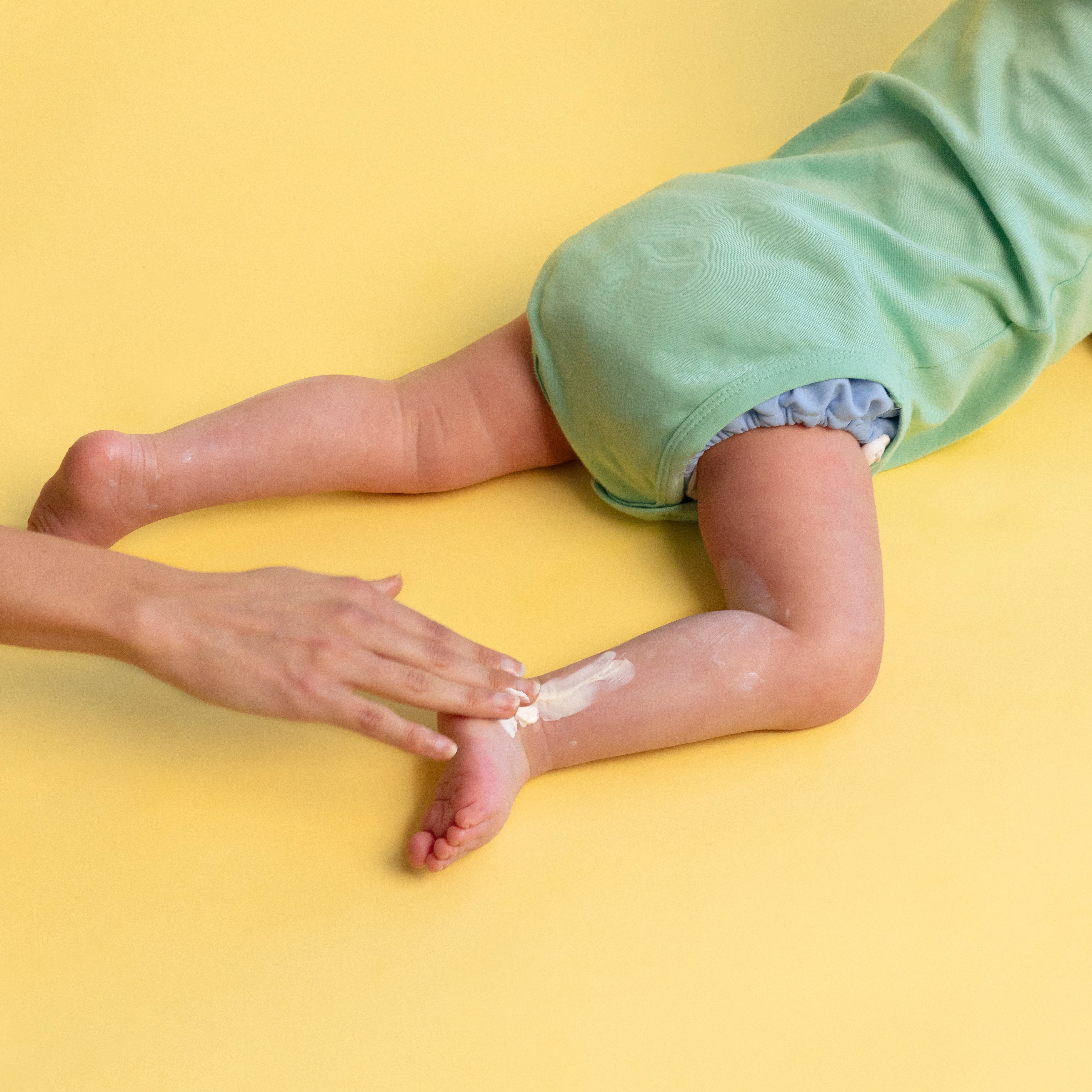
Babies and sunscreen, what's the deal with that? The short answer is: it's best to keep your newborn out of the sun completely. If this is not an option you can use a little bit of sunscreen from the age of 3 months to protect their skin. But which one do you choose? And what other ways are there to protect your (newborn) baby from harmful UV radiation? We'll tell you everything you need to know about babies and the sun.
Shade, sleeves and sunscreen
You'll want to keep your baby out of the sun as much as possible, for at least the first year. Shade it is! But that's easier said than done, and even in the shade there's UVA and UVB radiation. That's why it's important to also protect your baby with clothes, preferably with UV protection, sunglasses and a sun hat or cap. Just so you know you're safe. If it's really not possible to keep your (newborn) baby out of the sun, and the right clothes are not available, sunscreen is your last resort. The advice is to wait until your baby is at least three (but rather six) months old and to only use small amounts of mineral sunscreen. Shade, sleeves and, if you have to, sunscreen!
Which sunscreen can I use for my baby?
There are all kinds of sun protection out there, so how to choose the right sunscreen for your baby? There's mineral and non-mineral sunscreen. And what's the difference between sunscreen for babies, kids and adults? We're here to help!
What's the difference between mineral and non-mineral?
There's two different kinds of UV-filters: mineral and non-mineral. Non-mineral filters (used in traditional sunscreen) get absorbed by the skin, where a chemical reaction takes place. What follows is protection from UV radiation. The downside to some non-mineral filters, is that this chemical reaction can cause a rash or irritation for people with sensitive skin.
A mineral UV-filter works like a mirror on the skin. The sunscreen is made out of minerals, usually zinc oxide or titanium oxide. It creates a layer on the skin which reflects harmful UV radiation. Immediate protection and less likely to cause a rash. That's why mineral filters are very suitable for the sensitive baby skin.
Naïf's sun protection for babies has a zinc oxide based UV-filter. Mineral it is! But we did add a non-mineral booster to guarantee maximum protection. We use BEMT (Bis-Ethylhexyloxyphenol Methoxyphenyl Triazine). This UV-filter is safe and suitable for sensitive skin. And we only add a little, just to boost and strengthen the zinc oxide. Worry free protection it is.
How to use mineral sunscreen?
Zinc oxide can cause a white cast on the skin. Its the same ingredient that's in a zinc cream against diaper rash! The strength of zinc oxide: it protects the skin by creating a barrier. But although we don't care about a white butt, it's not what we prefer for sunscreen that's used all over the body. That's why natural oils like coconut and sunflower are added and the zinc oxide particles in sunscreen are made much smaller. Smooth application guaranteed!
What's the difference between sunscreen for babies, kids and adults
Is there a difference between sunscreen for babies and kids, and for adults? We can't speak for other brands of course, Naïf's sunscreen for kids is different than our baby sunscreen. Not only do we have a 0% perfume version for babies, our sunscreen for kids also has a non-mineral filter. A bit easier to apply and more comfortable on the skin for kids who get fussy. Baby sunscreen for yourself? No problem!
Can you use Naïf sunscreen for a newborn?
Our sun protection can be used for baby's from 3 months and up, but it's better to keep them out of the sun completely and protect them with shade or clothes. Really not possible? You can safely use a little bit of sunscreen to protect your baby's skin from the age of 3 months.
What does SPF mean?
The Sun Protection Factor tells you how well you're protected while enjoying the sun. An SPF 30 means there chance of sunburn is 30 times smaller than when you're using no sunscreen at all. For SPF 50 is 50 times less likely you'll get a sunburn. But this is of course not very fool proof, since not everyone reacts the same to the sun and it really depends on your skin type.
Which SPF do you choose for a baby?
Because your baby's skin is not used to anything yet, and no pigment is formed, it's important to protect is as much as possible. No sunscreen offers 100% protection, so always go for the highest SPF: 50! But don't forget to keep your baby out of the sun as much as possible and use sunscreen. Re-apply every 2 hours for maximum protection and you're good to go!
How much sunscreen do you need?
The Dutch Skin Foundation has the advise to use 7 teaspoons for the whole body:
-
1 teaspoon for the face, including the ears and neck
-
2 teaspoons for chest and back
-
2 teaspoons for shoulders, arms and hands
-
2 teaspoons for legs and feet
Every 2 hours! And try to avoid the sun between 12:00 and 15:00, because that's when the sun has the most strength. You got this!
(Source: AAD)

